


- Afhalen na 1 uur in een winkel met voorraad
- Gratis thuislevering in België vanaf € 30
- Ruim aanbod met 7 miljoen producten
- Afhalen na 1 uur in een winkel met voorraad
- Gratis thuislevering in België vanaf € 30
- Ruim aanbod met 7 miljoen producten





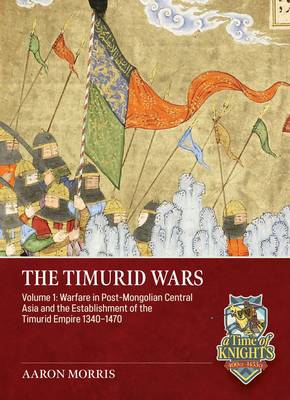
The Timurid Wars Volume 1
Warfare in Post-Mongolian Central Asia and the Establishment of the Timurid Empire, 1340-1470
Aaron Morris
€ 48,95
+ 97 punten
Omschrijving
The Timurid Empire (1370-1507) is often viewed as a bloody, but brief, successor to Genghis Khan's Empire. It rose from the ruins of the Mongolian Empire and, at its peak, ruled more than 1.7 million square miles in Central Asia. Timur defeated states that had resisted the Mongols for decades, and others that were emerging. The Timurid Wars covers the wars of conquest, the civil war after Timur's death, efforts to restore the empire amid constant disunity, and Central Asian warfare in the fourteenth century.
Timur, initially a minor noble in the service of the regional strongman, became one of the most powerful men in the world by the time of his death in 1405. He was born into a world of post-Mongol turmoil. In 1370, he seized control of the western half of the Chagataid Khanate. For the next 35 years, Timur conducted campaigns with a combined-arms army that continued to grow in size and capability before his death in 1405, while on the march to invade Ming China.
The author's extensive travels throughout the region and his knowledge of local languages have enabled him to share sources previously inaccessible to English readers.
Timur, initially a minor noble in the service of the regional strongman, became one of the most powerful men in the world by the time of his death in 1405. He was born into a world of post-Mongol turmoil. In 1370, he seized control of the western half of the Chagataid Khanate. For the next 35 years, Timur conducted campaigns with a combined-arms army that continued to grow in size and capability before his death in 1405, while on the march to invade Ming China.
The author's extensive travels throughout the region and his knowledge of local languages have enabled him to share sources previously inaccessible to English readers.
Specificaties
Betrokkenen
- Auteur(s):
- Uitgeverij:
Inhoud
- Aantal bladzijden:
- 464
- Taal:
- Engels
- Reeks:
Eigenschappen
- Productcode (EAN):
- 9781806722679
- Verschijningsdatum:
- 15/11/2026
- Uitvoering:
- Paperback
- Formaat:
- Trade paperback (VS)
- Afmetingen:
- 180 mm x 249 mm


Alleen bij Standaard Boekhandel
+ 97 punten op je klantenkaart van Standaard Boekhandel
Cadeau

AANGERADEN


Beoordelingen
We publiceren alleen reviews die voldoen aan de voorwaarden voor reviews. Bekijk onze voorwaarden voor reviews.