


- Afhalen na 1 uur in een winkel met voorraad
- Gratis thuislevering in België vanaf € 30
- Ruim aanbod met 7 miljoen producten
- Afhalen na 1 uur in een winkel met voorraad
- Gratis thuislevering in België vanaf € 30
- Ruim aanbod met 7 miljoen producten





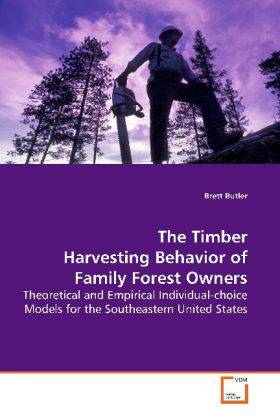
The Timber Harvesting Behavior of Family Forest Owners
Theoretical and Empirical Individual-choice Models for the Southeastern United States
Brett Butler
Paperback | Engels
€ 58,45
+ 116 punten
Omschrijving
To increase our understanding of the timber
harvesting behavior of family forest owners,
theoretical and empirical individual-choice models
were developed for the southeastern United States.
Owners were modeled as utility-maximizers who made
harvesting decisions by balancing amenity and profit
values. Harvesting was modeled as a function of
biophysical and socioeconomic variables. Data from
forest inventories and forest owner surveys
conducted by the U.S. Forest Service were used in
logistic regression harvesting models. Separate
models were generated for all family forest owners
and profit, multiple-objective, and amenity groups.
Harvesting propensities were highest for the profit
group and lowest for the amenity group. Stand
structure variables, such as basal area and volume,
were the most significant predictors of timber
harvesting. Other significant variables were
stumpage values, ownership objectives, and
absenteeism. The results of the models were
aggregated and implications for the region s timber
supply assessed. Continued shifts away from strong
timber objectives will decrease the flow of timber
from family forest lands.
harvesting behavior of family forest owners,
theoretical and empirical individual-choice models
were developed for the southeastern United States.
Owners were modeled as utility-maximizers who made
harvesting decisions by balancing amenity and profit
values. Harvesting was modeled as a function of
biophysical and socioeconomic variables. Data from
forest inventories and forest owner surveys
conducted by the U.S. Forest Service were used in
logistic regression harvesting models. Separate
models were generated for all family forest owners
and profit, multiple-objective, and amenity groups.
Harvesting propensities were highest for the profit
group and lowest for the amenity group. Stand
structure variables, such as basal area and volume,
were the most significant predictors of timber
harvesting. Other significant variables were
stumpage values, ownership objectives, and
absenteeism. The results of the models were
aggregated and implications for the region s timber
supply assessed. Continued shifts away from strong
timber objectives will decrease the flow of timber
from family forest lands.
Specificaties
Betrokkenen
- Auteur(s):
- Uitgeverij:
Inhoud
- Aantal bladzijden:
- 156
- Taal:
- Engels
Eigenschappen
- Productcode (EAN):
- 9783639152784
- Uitvoering:
- Paperback
- Afmetingen:
- 150 mm x 220 mm
- Gewicht:
- 251 g


Alleen bij Standaard Boekhandel
+ 116 punten op je klantenkaart van Standaard Boekhandel
Cadeau

AANGERADEN


Beoordelingen
We publiceren alleen reviews die voldoen aan de voorwaarden voor reviews. Bekijk onze voorwaarden voor reviews.