


- Afhalen na 1 uur in een winkel met voorraad
- Gratis thuislevering in België vanaf € 30
- Ruim aanbod met 7 miljoen producten
- Afhalen na 1 uur in een winkel met voorraad
- Gratis thuislevering in België vanaf € 30
- Ruim aanbod met 7 miljoen producten





€ 22,95
+ 45 punten
Uitvoering
Omschrijving
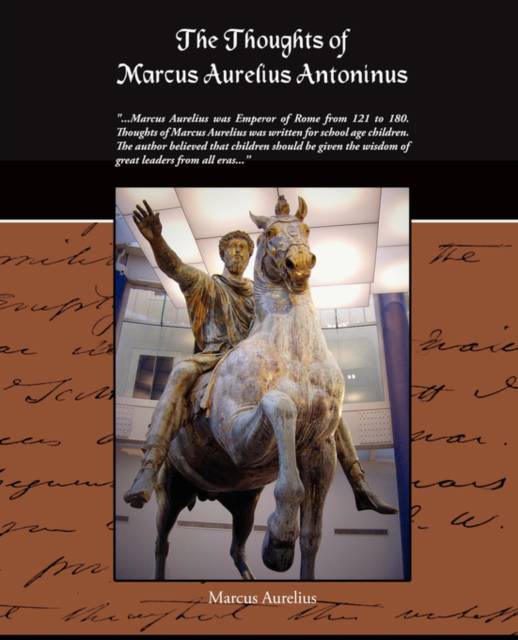
Marcus Aurelius was Emperor of Rome from 121 to 180. Thoughts of Marcus Aurelius was written for school age children. The author believed that children should be given the wisdom of great leaders from all eras. Marcus Aurelius believed that human happiness arises in part from man's acceptance of his duties and responsibilities. He believed that one should accept calmly what cannot be avoided and perform one's duties as well as possible. "It was the doctrine of Marcus Aurelius that most of the ills of life come to us from our own imagination, that it was not in the power of others seriously to interfere with the calm, temperate life of an individual, and that when a fellow being did anything to us that seemed unjust he was acting in ignorance, and that instead of stirring up anger within us it should stir our pity for him. Oftentimes by careful self-examination we should find that the fault was more our own than that of our fellow, and our sufferings were rather from our own opinions than from anything real."
Specificaties
Betrokkenen
- Auteur(s):
- Uitgeverij:
Inhoud
- Aantal bladzijden:
- 156
- Taal:
- Engels
Eigenschappen
- Productcode (EAN):
- 9781438510118
- Verschijningsdatum:
- 2/02/2009
- Uitvoering:
- Paperback
- Formaat:
- Trade paperback (VS)
- Afmetingen:
- 190 mm x 235 mm
- Gewicht:
- 281 g


Alleen bij Standaard Boekhandel
+ 45 punten op je klantenkaart van Standaard Boekhandel
AANGERADEN


Beoordelingen
We publiceren alleen reviews die voldoen aan de voorwaarden voor reviews. Bekijk onze voorwaarden voor reviews.