


- Afhalen na 1 uur in een winkel met voorraad
- Gratis thuislevering in België vanaf € 30
- Ruim aanbod met 7 miljoen producten
- Afhalen na 1 uur in een winkel met voorraad
- Gratis thuislevering in België vanaf € 30
- Ruim aanbod met 7 miljoen producten





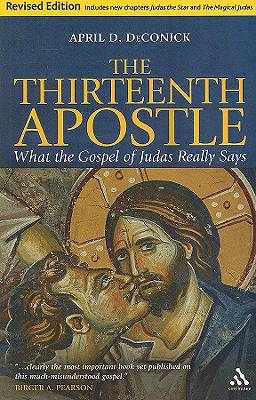
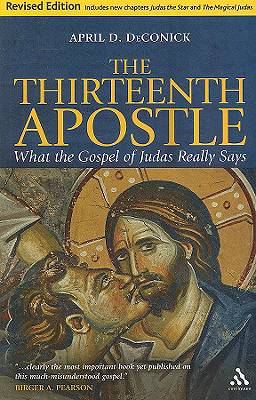
The Thirteenth Apostle
Revised Edition: What the Gospel of Judas Really Says
April D Deconick
Paperback | Engels
€ 52,45
+ 104 punten
Omschrijving
The first book to challenge The National Geographic version of the Gospel of Judas, The Thirteenth Apostle is sure to inspire to fresh debate around this most infamous of biblical figures. In 2006 The National G eographic Society released the first English translation of the Gospel of Judas, a second-century text discovered in Egypt in the 1970s. The translation
caused a sensation because it seemed to overturn the popular image of Judas the betrayer and instead presented a benevolent Judas who was a friend of Jesus.
In The Thirteenth Apostle, April DeConick offers a new translation of the Gospel of Judas that seriously challenges The National Geographic interpretation. Inspired by The National Geographic Society's efforts to piece together this ancient
manuscript, DeConick sought out the original Coptic text and began her own translation: "I didn't find the sublime Judas, at least not in Coptic. What I found were a series of English translation choices made by the National Geographic team, choices that permitted a different Judas to emerge in the English translation than in the Coptic original. Judas was not only not sublime, he was far more demonic than any Judas
I know in any other piece of early Christian literature, Gnostic or otherwise." -April D. DeConick
caused a sensation because it seemed to overturn the popular image of Judas the betrayer and instead presented a benevolent Judas who was a friend of Jesus.
In The Thirteenth Apostle, April DeConick offers a new translation of the Gospel of Judas that seriously challenges The National Geographic interpretation. Inspired by The National Geographic Society's efforts to piece together this ancient
manuscript, DeConick sought out the original Coptic text and began her own translation: "I didn't find the sublime Judas, at least not in Coptic. What I found were a series of English translation choices made by the National Geographic team, choices that permitted a different Judas to emerge in the English translation than in the Coptic original. Judas was not only not sublime, he was far more demonic than any Judas
I know in any other piece of early Christian literature, Gnostic or otherwise." -April D. DeConick
Specificaties
Betrokkenen
- Auteur(s):
- Uitgeverij:
Inhoud
- Aantal bladzijden:
- 296
- Taal:
- Engels
Eigenschappen
- Productcode (EAN):
- 9781847065681
- Verschijningsdatum:
- 23/06/2009
- Uitvoering:
- Paperback
- Formaat:
- Trade paperback (VS)
- Afmetingen:
- 139 mm x 217 mm
- Gewicht:
- 371 g


Alleen bij Standaard Boekhandel
+ 104 punten op je klantenkaart van Standaard Boekhandel
CADEAU


Beoordelingen
We publiceren alleen reviews die voldoen aan de voorwaarden voor reviews. Bekijk onze voorwaarden voor reviews.