


- Afhalen na 1 uur in een winkel met voorraad
- Gratis thuislevering in België vanaf € 30
- Ruim aanbod met 7 miljoen producten
- Afhalen na 1 uur in een winkel met voorraad
- Gratis thuislevering in België vanaf € 30
- Ruim aanbod met 7 miljoen producten





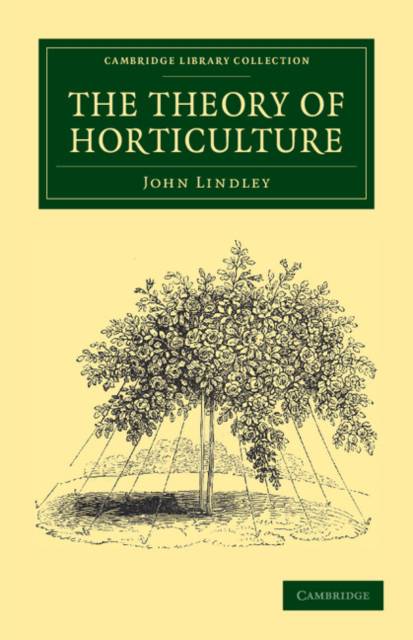
The Theory of Horticulture
Or, an Attempt to Explain the Principal Operations of Gardening Upon Physiological Principles
John Lindley
€ 95,45
+ 190 punten
Omschrijving
John Lindley (1799-1865) was an English horticulturalist who worked for Sir Joseph Banks and was later instrumental in saving the Royal Horticultural Society from financial disaster. His earlier books on British plants were well received and he was influential in the realm of botanical nomenclature, especially in orchidology. He was a prolific author and many of his books were aimed at a non-specialist readership. His aim in this work, published in 1840, was to provide 'the intelligent gardener, and the scientific amateur ... with the rationalia of the more important operations of horticulture'. Beginning with a chapter on seeds, the first part of the book describes the life and structure of a plant - the root, the stem, the leaves, the flowers and the fruit. The second part moves on to practical topics, such as ventilation and seed-saving, as well as pruning and potting, explaining many basic concepts of plant cultivation.
Specificaties
Betrokkenen
- Auteur(s):
- Uitgeverij:
Inhoud
- Aantal bladzijden:
- 410
- Taal:
- Engels
- Reeks:
Eigenschappen
- Productcode (EAN):
- 9781108037242
- Verschijningsdatum:
- 3/11/2011
- Uitvoering:
- Paperback
- Formaat:
- Trade paperback (VS)
- Afmetingen:
- 140 mm x 216 mm
- Gewicht:
- 517 g


Alleen bij Standaard Boekhandel
+ 190 punten op je klantenkaart van Standaard Boekhandel
Cadeau

AANGERADEN


Beoordelingen
We publiceren alleen reviews die voldoen aan de voorwaarden voor reviews. Bekijk onze voorwaarden voor reviews.