


- Afhalen na 1 uur in een winkel met voorraad
- Gratis thuislevering in België vanaf € 30
- Ruim aanbod met 7 miljoen producten
- Afhalen na 1 uur in een winkel met voorraad
- Gratis thuislevering in België vanaf € 30
- Ruim aanbod met 7 miljoen producten





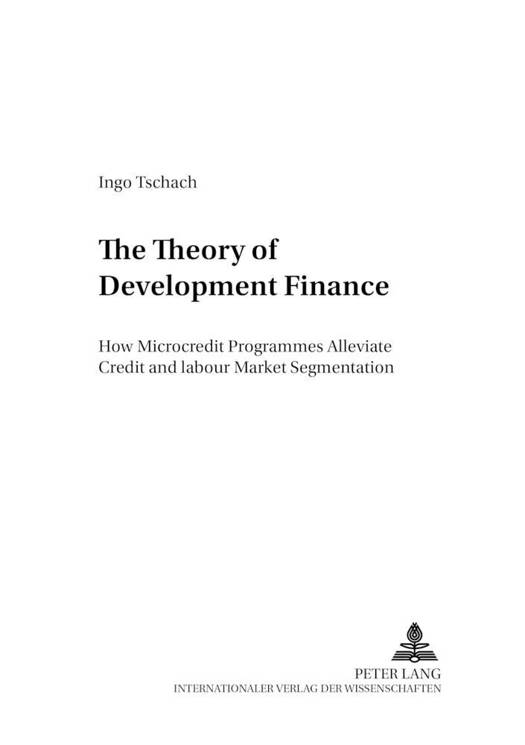
The Theory of Development Finance
How Microcredit Programmes Alleviate Credit and Labour Market Segmentation
Ingo Tschach
€ 77,95
+ 155 punten
Omschrijving
The book explores the problem of credit market segmentation, a widespread phenomenon in developing countries, within a theoretical framework based on graphical analysis. It investigates the causes and effects of this problem, and the impact of possible solutions. Credit market segmentation is an outgrowth of information-related problems and high transaction costs in lending. It leads to segmentation in labour markets and also results in inefficient factor allocation and highly skewed income distribution patterns. A theoretical impact analysis shows that microcredit programmes can eliminate the causes and effects of credit market segmentation and that their impact is much broader than is usually assumed. This book should be required reading for everyone who is interested in microcredit.
Specificaties
Betrokkenen
- Auteur(s):
- Uitgeverij:
Inhoud
- Aantal bladzijden:
- 160
- Taal:
- Engels
- Reeks:
- Reeksnummer:
- nr. 11
Eigenschappen
- Productcode (EAN):
- 9783631392034
- Verschijningsdatum:
- 20/06/2002
- Uitvoering:
- Paperback
- Formaat:
- Trade paperback (VS)
- Afmetingen:
- 148 mm x 210 mm
- Gewicht:
- 239 g


Alleen bij Standaard Boekhandel
+ 155 punten op je klantenkaart van Standaard Boekhandel
CADEAU

AANGERADEN


Beoordelingen
We publiceren alleen reviews die voldoen aan de voorwaarden voor reviews. Bekijk onze voorwaarden voor reviews.