


- Afhalen na 1 uur in een winkel met voorraad
- Gratis thuislevering in België vanaf € 30
- Ruim aanbod met 7 miljoen producten
- Afhalen na 1 uur in een winkel met voorraad
- Gratis thuislevering in België vanaf € 30
- Ruim aanbod met 7 miljoen producten





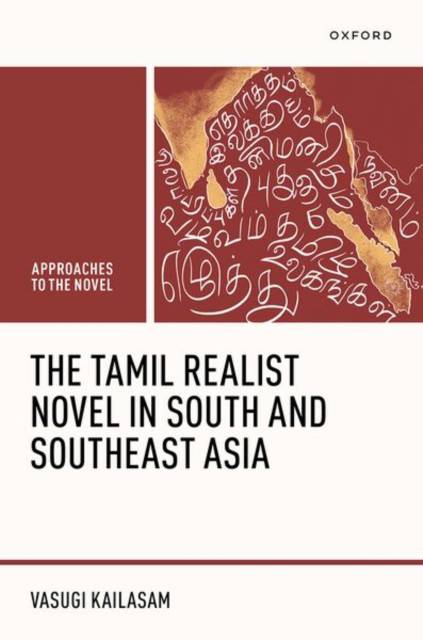
The Tamil Realist Novel in South and Southeast Asia
Vasugi Kailasam
€ 123,95
+ 247 punten
Omschrijving
The Tamil Realist Novel in South and Southeast Asia traces the emergence of Tamil literary realism as a transregional formation across India, Sri Lanka, Malaysia, and Singapore from the 1940s to the 1980s. Focusing on a pivotal period when realism was being actively redefined, the book argues that Tamil writers turned to the novel not simply as a mirror of social life, but as a generative form for negotiating political struggle, articulating new modes of individuality, and reimagining the self within rapidly changing postcolonial landscapes. Through close readings of authors such as Kaa. Naa. Subramanyam, Kalki Krishnamoorthy, C. N. Annadurai, Puthumaipithan, P. Singaram, Kalki Krishnamurthy, Poomani, T. M. C. Raghunathan, K. Daniel, and Sundara Ramasamy, the book explores how literary realism (yatharthvatham) was adopted as a self-conscious strategy for articulating Tamil ethnic identity, caste critique, and socialist thought. It situates the realist novel within a broader media environment--serialized fiction, political oratory, cinema, and popular periodicals--that shaped how the "real" was imagined and made legible. By situating Tamil literary production within a transregional frame, this book challenges dominant histories of modern South Asian literature that privilege Anglophone, Hindi-Urdu, and Bengali traditions. In doing so, it offers a new comparative framework for reading vernacular modernisms, one that foregrounds mobility, fracture, and interconnectedness over fixed origins or unified narratives.
Specificaties
Betrokkenen
- Auteur(s):
- Uitgeverij:
Inhoud
- Aantal bladzijden:
- 256
- Taal:
- Engels
- Reeks:
Eigenschappen
- Productcode (EAN):
- 9780198930822
- Verschijningsdatum:
- 7/05/2026
- Uitvoering:
- Hardcover
- Formaat:
- Genaaid
- Afmetingen:
- 156 mm x 234 mm



Alleen bij Standaard Boekhandel
+ 247 punten op je klantenkaart van Standaard Boekhandel
Cadeau

AANGERADEN


Beoordelingen
We publiceren alleen reviews die voldoen aan de voorwaarden voor reviews. Bekijk onze voorwaarden voor reviews.