


- Afhalen na 1 uur in een winkel met voorraad
- Gratis thuislevering in België vanaf € 30
- Ruim aanbod met 7 miljoen producten
- Afhalen na 1 uur in een winkel met voorraad
- Gratis thuislevering in België vanaf € 30
- Ruim aanbod met 7 miljoen producten





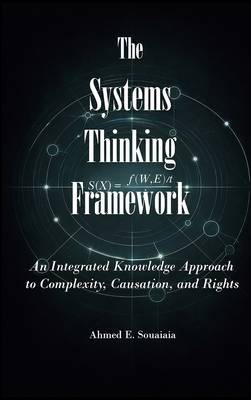
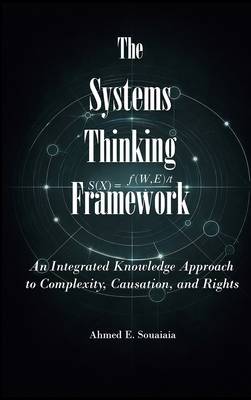
The Systems Thinking Framework
An Integrated Knowledge Approach to Complexity, Causation, and Human Rights
Ahmed E Souaiaia
Hardcover | Engels
€ 59,45
Omschrijving
The Systems Thinking Framework presents a rigorous analytical methodology for understanding how complex phenomena, from climate disruption to human rights violations, emerge not from isolated causes but from interacting systems operating across time. This work formalizes systems thinking as a disciplined approach grounded in universal principles of work, energy, and temporal dynamics.
Distinctively, the framework integrates normativity, power, and historical causation into systemic analysis, domains often excluded from conventional systems theory. Drawing on cross-civilizational intellectual traditions, including classical Greek philosophy and Islamic scholarship (notably Ibn Sīnā and Ibn Khaldūn), the author demonstrates that holistic, relational reasoning has long provided durable insight into complex realities. The book introduces a step-by-step systems mapping protocol that enables scholars and practitioners to identify determinant and contributory systems, trace feedback dynamics, and locate leverage points for intervention.
Applied innovatively to rights analysis, the framework reframes violations not as moral failures but as systemic outcomes produced by configurations optimized for efficiency, scale, or extraction. By making visible how interconnected economic, political, legal, and environmental systems generate persistent harm, this work offers an indispensable tool for scholars, teachers, researchers, and advocates confronting the entangled crises of our time, where fragmented explanations and single-variable solutions have repeatedly proven inadequate.
Specificaties
Betrokkenen
- Auteur(s):
- Uitgeverij:
Inhoud
- Aantal bladzijden:
- 104
- Taal:
- Engels
Eigenschappen
- Productcode (EAN):
- 9798888230145
- Verschijningsdatum:
- 16/03/2026
- Uitvoering:
- Hardcover
- Formaat:
- Genaaid
- Afmetingen:
- 152 mm x 229 mm
- Gewicht:
- 312 g


Alleen bij Standaard Boekhandel
Cadeau

AANGERADEN


Beoordelingen
We publiceren alleen reviews die voldoen aan de voorwaarden voor reviews. Bekijk onze voorwaarden voor reviews.