


- Afhalen na 1 uur in een winkel met voorraad
- Gratis thuislevering in België vanaf € 30
- Ruim aanbod met 7 miljoen producten
- Afhalen na 1 uur in een winkel met voorraad
- Gratis thuislevering in België vanaf € 30
- Ruim aanbod met 7 miljoen producten





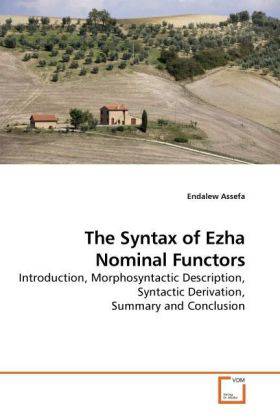
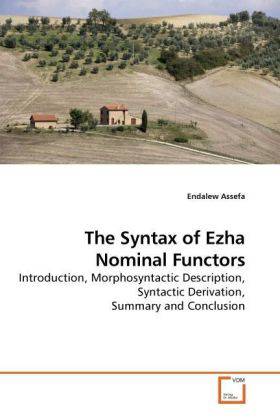
The Syntax of Ezha Nominal Functors
Introduction, Morphosyntactic Description, Syntactic Derivation, Summary and Conclusion
Endalew Assefa
Paperback | Engels
€ 66,45
+ 132 punten
Omschrijving
This monograph takes E a(Ezha)as its target language of discussion. In light of the absence of reliable syntactic description on the language, the researcher has taken over the task of describing some aspects of the language s syntax, the structure of nominal functors. The functional elements that go with nouns have first been identified and described in terms of their morphosyntactic behavior.Some functors are part of the nouns morphology, while others are not. Within the category of functors that are part of the morphology of nouns, the associative plural morpheme, the gender marker, the accusative and vocative case markers, the possessive/genitive suffixes, the definite article and the focus marker have been investigated. The category of functors which are not part of the nouns morphology includes: the indefinite article, pronominals, demonstratives, interrogatives, both specific and non-specific quantificational elements, classifier phrases and the nominal negator. Once the functors have been identified and described, they are then analyzed in terms of their syntactic derivations.
Specificaties
Betrokkenen
- Auteur(s):
- Uitgeverij:
Inhoud
- Aantal bladzijden:
- 100
- Taal:
- Engels
Eigenschappen
- Productcode (EAN):
- 9783639227703
- Verschijningsdatum:
- 12/02/2010
- Uitvoering:
- Paperback
- Afmetingen:
- 150 mm x 220 mm
- Gewicht:
- 168 g


Alleen bij Standaard Boekhandel
+ 132 punten op je klantenkaart van Standaard Boekhandel
AANGERADEN


Beoordelingen
We publiceren alleen reviews die voldoen aan de voorwaarden voor reviews. Bekijk onze voorwaarden voor reviews.