



Je cadeautjes zeker op tijd in huis hebben voor de feestdagen? Kom langs in onze winkels en vind het perfecte geschenk!
- Afhalen na 1 uur in een winkel met voorraad
- Gratis thuislevering in België vanaf € 30
- Ruim aanbod met 7 miljoen producten
Je cadeautjes zeker op tijd in huis hebben voor de feestdagen? Kom langs in onze winkels en vind het perfecte geschenk!
- Afhalen na 1 uur in een winkel met voorraad
- Gratis thuislevering in België vanaf € 30
- Ruim aanbod met 7 miljoen producten





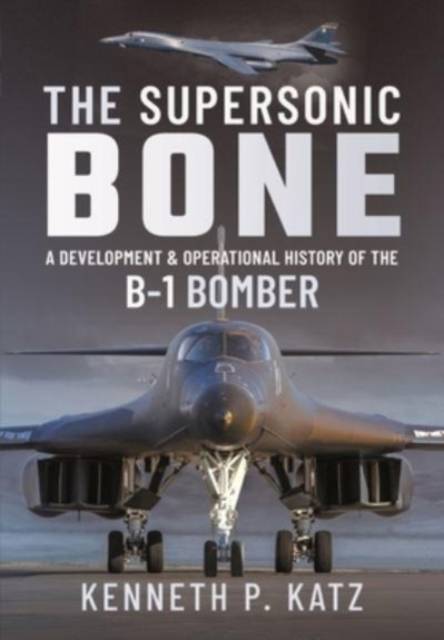
The Supersonic Bone
A Development and Operational History of the B-1 Bomber
Kenneth Katz
Hardcover | Engels
€ 48,95
+ 97 punten
Omschrijving
"This superbly researched and illustrated book traces the BONE's long development and operational history in fascinating detail." - Scale Modeling Now
When the B-52 Stratofortress entered operational service with the US Air Force in 1955, work was already underway on defining its successor. The B-70 Valkyrie, a Mach 3 jet bomber, was one option. Although two XB-70A prototypes flew, the B-70 never went into production. Out of the subsequent Advanced Manned Strategic Aircraft program came the B-1A bomber, which flew at high speed and low altitude to evade enemy air defenses. The B-1A was canceled in favor of fitting the B-52 with cruise missiles. The B-1, known as the BONE, was revived in 1981 as the improved B-1B to boost American military power and be a symbol of American strength at the peak of Cold War tensions. The B-1B entered service in 1986 with several deficiencies. The resolution of most of these issues coincided with the end of the Cold War.
After the Cold War, the B-1B lost its primary nuclear mission but remained relevant by transforming into a high-speed, long-range, high-payload delivery platform for conventional precision-guided munitions. The first combat use of the B-1B was in 1998 in Iraq. The BONE has proved a highly effective combat aircraft in Afghanistan, Iraq, Libya, Syria and the former Yugoslavia.
This superbly researched and illustrated book traces the BONE's long development and operational history in fascinating detail.
When the B-52 Stratofortress entered operational service with the US Air Force in 1955, work was already underway on defining its successor. The B-70 Valkyrie, a Mach 3 jet bomber, was one option. Although two XB-70A prototypes flew, the B-70 never went into production. Out of the subsequent Advanced Manned Strategic Aircraft program came the B-1A bomber, which flew at high speed and low altitude to evade enemy air defenses. The B-1A was canceled in favor of fitting the B-52 with cruise missiles. The B-1, known as the BONE, was revived in 1981 as the improved B-1B to boost American military power and be a symbol of American strength at the peak of Cold War tensions. The B-1B entered service in 1986 with several deficiencies. The resolution of most of these issues coincided with the end of the Cold War.
After the Cold War, the B-1B lost its primary nuclear mission but remained relevant by transforming into a high-speed, long-range, high-payload delivery platform for conventional precision-guided munitions. The first combat use of the B-1B was in 1998 in Iraq. The BONE has proved a highly effective combat aircraft in Afghanistan, Iraq, Libya, Syria and the former Yugoslavia.
This superbly researched and illustrated book traces the BONE's long development and operational history in fascinating detail.
Specificaties
Betrokkenen
- Auteur(s):
- Uitgeverij:
Inhoud
- Aantal bladzijden:
- 392
- Taal:
- Engels
Eigenschappen
- Productcode (EAN):
- 9781399014717
- Verschijningsdatum:
- 18/03/2022
- Uitvoering:
- Hardcover
- Formaat:
- Genaaid
- Afmetingen:
- 170 mm x 248 mm
- Gewicht:
- 1270 g


Alleen bij Standaard Boekhandel
+ 97 punten op je klantenkaart van Standaard Boekhandel
CADEAU


Beoordelingen
We publiceren alleen reviews die voldoen aan de voorwaarden voor reviews. Bekijk onze voorwaarden voor reviews.