


- Afhalen na 1 uur in een winkel met voorraad
- Gratis thuislevering in België vanaf € 30
- Ruim aanbod met 7 miljoen producten
- Afhalen na 1 uur in een winkel met voorraad
- Gratis thuislevering in België vanaf € 30
- Ruim aanbod met 7 miljoen producten





Omschrijving
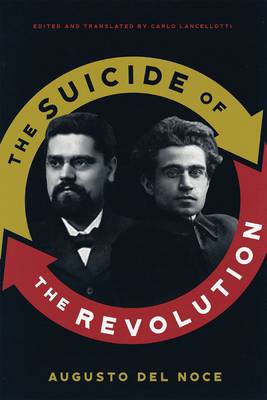
Philosopher Augusto Del Noce, one of Italy's foremost cultural critics and political thinkers, examined the relationship between fascism and Gramscian Marxism in four influential essays. First published in Italian in 1978, The Suicide of the Revolution contends that Giovanni Gentile's late-nineteenth-century critique of Marxism had a foundational influence on Antonio Gramsci and, ultimately, shaped not only fascism but also the thinking of many anti-fascists. Deeply controversial at the time of publication, Del Noce's interpretation remains vibrant and relevant.
In twentieth-century Italy, the process of modernization and secularization unfolded in a very transparent and consequential way due to a strong parallelism between philosophy and politics. Del Noce argued that Gramsci's attempt to reform Marxism had the unintended consequence of lending ideological support to a radical form of neoliberalism that ironically nullified Gramsci's own revolutionary hopes. By the 1970s the Communist Party in Italy had become the party of the progressive bourgeoisie, supported by academics, journalists, artists, and intellectuals, all of whom were deeply invested in the status quo. This inversion of the left, which Del Noce saw happening throughout the Western world, marked "the suicide of the revolution" that he regarded as the most important political development of the twentieth century. Translated into English for the first time, this collection is essential reading for those seeking to understand the deep intellectual currents that shape contemporary politics.Specificaties
Betrokkenen
- Auteur(s):
- Vertaler(s):
- Uitgeverij:
Inhoud
- Aantal bladzijden:
- 372
- Taal:
- Engels
- Reeks:
- Reeksnummer:
- nr. 95
Eigenschappen
- Productcode (EAN):
- 9780228026808
- Verschijningsdatum:
- 21/04/2026
- Uitvoering:
- Paperback
- Formaat:
- Trade paperback (VS)
- Afmetingen:
- 152 mm x 229 mm
- Gewicht:
- 453 g



Alleen bij Standaard Boekhandel
+ 86 punten op je klantenkaart van Standaard Boekhandel
Cadeau

AANGERADEN


Beoordelingen
We publiceren alleen reviews die voldoen aan de voorwaarden voor reviews. Bekijk onze voorwaarden voor reviews.