


- Afhalen na 1 uur in een winkel met voorraad
- Gratis thuislevering in België vanaf € 30
- Ruim aanbod met 7 miljoen producten
- Afhalen na 1 uur in een winkel met voorraad
- Gratis thuislevering in België vanaf € 30
- Ruim aanbod met 7 miljoen producten





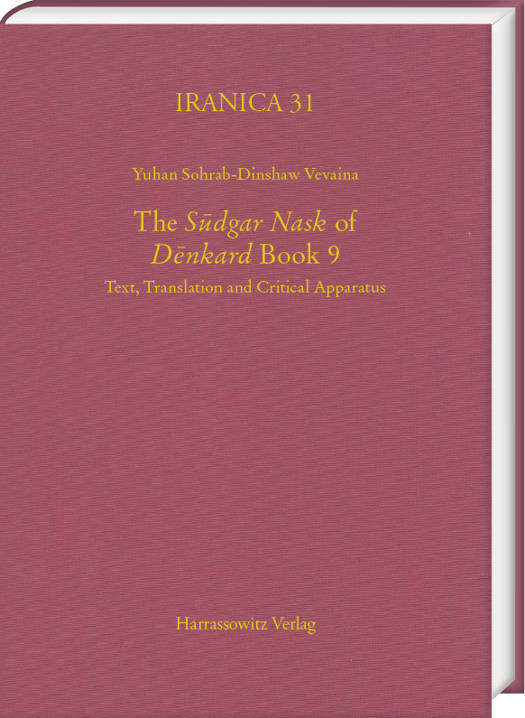
The 'Sudgar Nask' of 'Denkard' Book 9
Text, Translation and Critical Apparatus
Yuhan Sohrab-Dinshaw Vevaina
€ 206,95
+ 413 punten
Omschrijving
The Sudgar Nask of Denkard Book 9 is one of the most enigmatic and yet fundamental texts of Zoroastrianism. It is a commentary on the 'Old Avesta' of the 2nd millennium BCE produced in Pahlavi (Zoroastrian Middle Persian) in the Sasanian (224-651 CE) and early Islamic centuries. This commentary purportedly based on earlier Pahlavi translations and commentaries of lost Young Avestan tractates commenting in turn on the 'Old Avesta' is a value-laden, ideologically motivated discourse that displays a rich panoply of tradition-constituted forms of allegoresis. This terse yet highly allusive text mobilizes complex forms of citation, allusion, and intertextuality from the inherited Avestan world of myth and ritual in order to engage with and react to the profound changes occurring in the relationships between theology, religious praxis, national identity, and imperial politics in Iranian society. Despite its value and importance for developing our nascent understanding of Zoroastrian hermeneutics and the self-conception of the Zoroastrian priesthood in Late Antiquity, this primary source has attracted scant scholarly attention due to the extreme difficulty of its subject matter and the lack of a reliable translation. This volume represents the first critical edition and translation of this formidable text which will contribute to the philological, theological, and historiographical study of Zoroastrianism in a pivotal moment in its rich and illustrious history.
Specificaties
Betrokkenen
- Auteur(s):
- Uitgeverij:
Inhoud
- Aantal bladzijden:
- 290
- Taal:
- Engels
- Reeks:
- Reeksnummer:
- nr. 31
Eigenschappen
- Productcode (EAN):
- 9783447121057
- Verschijningsdatum:
- 22/11/2023
- Uitvoering:
- Hardcover
- Formaat:
- Genaaid
- Afmetingen:
- 176 mm x 244 mm
- Gewicht:
- 748 g


Alleen bij Standaard Boekhandel
+ 413 punten op je klantenkaart van Standaard Boekhandel
Wedstrijd


Beoordelingen
We publiceren alleen reviews die voldoen aan de voorwaarden voor reviews. Bekijk onze voorwaarden voor reviews.