


- Afhalen na 1 uur in een winkel met voorraad
- Gratis thuislevering in België vanaf € 30
- Ruim aanbod met 7 miljoen producten
- Afhalen na 1 uur in een winkel met voorraad
- Gratis thuislevering in België vanaf € 30
- Ruim aanbod met 7 miljoen producten





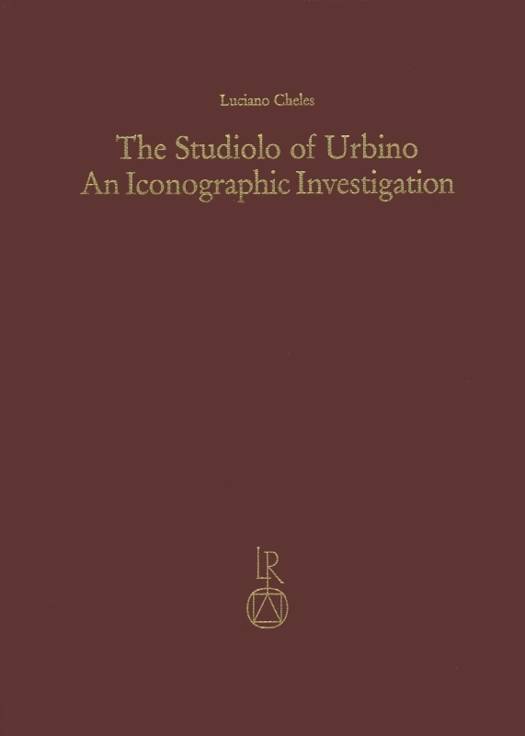
The Studiolo of Urbino - An Iconographic Investigation
An Iconographic Investigation
Luciano Cheles
Hardcover | Engels
€ 77,45
+ 154 punten
Omschrijving
The "studiolo" of Federico da Montefeltro in Urbino, the highlight of the Ducal Palace, is the most complete surviving example of an early Renaissance study. Its decorations (dated 1476) consist of a coffered ceiling, of inlaid panels depicting with impressice illusionism a fully-furnished "studiolo" interior, and of a painted frieze of 28 portraits of famous men. The latter have recently been re-assembled in the room (14 of them photographically, since their originals remain in the Louvre), for the first time since their dispersal in 1632. Much has been written on the decorations, but scholars have never attempted to analyse the various parts as an interacting whole, in order to establish whether they embody an iconographic programme. Such an investigation constitutes the main aim of the monograph. After an introduction on the cultural background, the various reconstructions of the painted frieze are critically surveyed to show why, in spite of continuing controversy, the arrangement proposed by Rotondi in 1973 (which the "Soprintendenza" of Urbino has followed) should be treated as definitive. The monograph also deals with the Gubbio "studiolo", a derivative of the Urbino one (its woodwork is in the Metropolitan Museum). A thourough re-examination of the question of the reconstruction leads to the view that, contrary to common assumption, the "Liberal Arts" attributed to Justus of Ghent were not part of the original decorations. Both "studioli" are richly illustrated; specially taken colour photographs of the famous men in situ are also included in the volume.
Specificaties
Betrokkenen
- Auteur(s):
- Uitgeverij:
Inhoud
- Aantal bladzijden:
- 196
- Taal:
- Engels
Eigenschappen
- Productcode (EAN):
- 9783882262766
- Verschijningsdatum:
- 31/12/2011
- Uitvoering:
- Hardcover
- Formaat:
- Genaaid
- Afmetingen:
- 280
- Gewicht:
- 720 g


Alleen bij Standaard Boekhandel
+ 154 punten op je klantenkaart van Standaard Boekhandel
Cadeau

AANGERADEN


Beoordelingen
We publiceren alleen reviews die voldoen aan de voorwaarden voor reviews. Bekijk onze voorwaarden voor reviews.