


- Afhalen na 1 uur in een winkel met voorraad
- Gratis thuislevering in België vanaf € 30
- Ruim aanbod met 7 miljoen producten
- Afhalen na 1 uur in een winkel met voorraad
- Gratis thuislevering in België vanaf € 30
- Ruim aanbod met 7 miljoen producten





€ 599,95
+ 1199 punten
Omschrijving
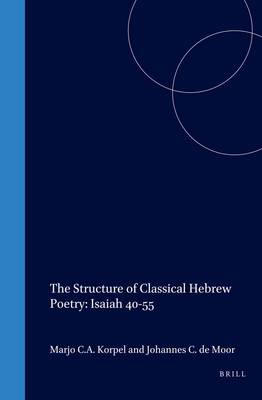
Exegesis starts with the delimitation of the pericope to be interpreted. Yet the principles for selecting passages which form the part of departure for the exegete are seldom made explicit and if one compares various commentaries and Bible translations, it soon becomes apparent that this lack of methodical transparency gives rise to a lot of confusion and dissent.
In this work the authors make use of text divisions found in ancient Hebrew, Greek and Syriac manuscripts of Isaiah 40-55 (Deutero-Isaiah). For the first time the poetic structure of the text is based on controllable evidence which is roughly 500-1000 years older than the medieval Masoretic manuscripts on which all modern editions are based. The results are astonishing and raise the question why this type of evidence has been largely neglected thus far.
In this work the authors make use of text divisions found in ancient Hebrew, Greek and Syriac manuscripts of Isaiah 40-55 (Deutero-Isaiah). For the first time the poetic structure of the text is based on controllable evidence which is roughly 500-1000 years older than the medieval Masoretic manuscripts on which all modern editions are based. The results are astonishing and raise the question why this type of evidence has been largely neglected thus far.
Specificaties
Betrokkenen
- Auteur(s):
- Uitgeverij:
Inhoud
- Aantal bladzijden:
- 754
- Taal:
- Engels
- Reeks:
- Reeksnummer:
- nr. 41
Eigenschappen
- Productcode (EAN):
- 9789004112612
- Verschijningsdatum:
- 22/12/1998
- Uitvoering:
- Hardcover
- Formaat:
- Genaaid
- Afmetingen:
- 168 mm x 245 mm
- Gewicht:
- 1442 g


Alleen bij Standaard Boekhandel
+ 1199 punten op je klantenkaart van Standaard Boekhandel
CADEAU


Beoordelingen
We publiceren alleen reviews die voldoen aan de voorwaarden voor reviews. Bekijk onze voorwaarden voor reviews.