


- Afhalen na 1 uur in een winkel met voorraad
- Gratis thuislevering in België vanaf € 30
- Ruim aanbod met 7 miljoen producten
- Afhalen na 1 uur in een winkel met voorraad
- Gratis thuislevering in België vanaf € 30
- Ruim aanbod met 7 miljoen producten





€ 103,95
+ 207 punten
Uitvoering
Omschrijving
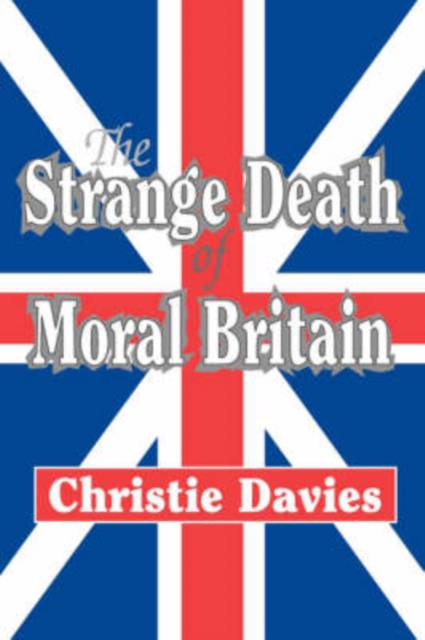
In the last half of the twentieth century, a once respectable and religious Britain became a seriously violent and dishonest society, one in which person and property were at risk, family breakdown was ubiquitous, and drug and alcohol abuse was rising. The Strange Death of Moral Britain demonstrates in detail the roots of Britain's decline. It also shows how a society, strongly Protestant in both morality and identity, became one of the most secular societies in the world.The culture wars about abortion, capital punishment, and homosexuality, which have convulsed the United States, have little meaning in Britain where there is neither a moral majority nor any indigenous emphasis on rights. In the period when Britain had a strong national and religious identity, defense of this identity led to legal persecution of male homosexuals. As Britain's identity crumbled, homosexuality ceased to be an important issue for most people. Similarly, all the pressing questions on abortion, capital punishment, and homosexuality were settled permanently on a purely utilitarian basis in Britain, where all sources of moral argument are weak. The ending of the death penalty marked the decline of the influence of the official hierarchies of church and state, the Church of England, the armed forces, and their representative, the Conservative Party.The Strange Death of Moral Britain is a study of moral change, secularization, loss of identity, and the growth of deviant behavior in Britain in the twentieth century. Based on detailed scholarship, it is tightly argued and clearly written with a minimum of jargon. It will be of interest to scholars in religious studies and British social history, and to a general reading public concerned with timely moral controversies.
Specificaties
Betrokkenen
- Auteur(s):
- Uitgeverij:
Inhoud
- Aantal bladzijden:
- 288
- Taal:
- Engels
Eigenschappen
- Productcode (EAN):
- 9781412806220
- Verschijningsdatum:
- 15/08/2006
- Uitvoering:
- Paperback
- Formaat:
- Trade paperback (VS)
- Afmetingen:
- 154 mm x 231 mm
- Gewicht:
- 471 g



Alleen bij Standaard Boekhandel
+ 207 punten op je klantenkaart van Standaard Boekhandel
Cadeau

AANGERADEN


Beoordelingen
We publiceren alleen reviews die voldoen aan de voorwaarden voor reviews. Bekijk onze voorwaarden voor reviews.