


- Afhalen na 1 uur in een winkel met voorraad
- Gratis thuislevering in België vanaf € 30
- Ruim aanbod met 7 miljoen producten
- Afhalen na 1 uur in een winkel met voorraad
- Gratis thuislevering in België vanaf € 30
- Ruim aanbod met 7 miljoen producten





€ 40,95
+ 81 punten
Uitvoering
Eenvoudig bestellen
Veilig betalen


Gratis thuislevering vanaf € 30 (via bpost)
Gratis levering in je Standaard Boekhandel
Omschrijving
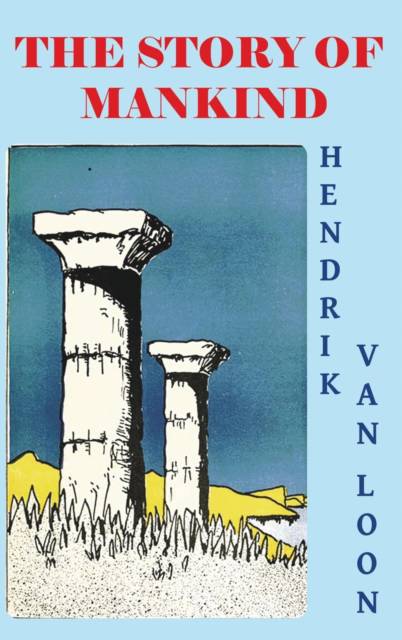
The Story of Mankind was written and illustrated by Dutch-American journalist, professor, and author Hendrik Willem van Loon and published in 1921. In 1922, it was the first book to be awarded the Newbery Medal for an outstanding contribution to children's literature. Written for his children (Hansje and Willem), The Story of Mankind tells in brief chapters the history of western civilization beginning with primitive man, covering the development of writing, art, and architecture, the rise of major religions, and the formation of the modern (for 1921) nation-state. Van Loon explains in the book how he selected what and what not to include by subjecting all materials to the question: Did the person or event in question perform an act without which the entire history of civilization would have been different? The author was born in Rotterdam, Netherlands, the son of Hendrik Willem van Loon and Elisabeth Johanna Hanken. He went to the United States in 1902 to study at Cornell University, receiving his degree in 1905. In 1906 he married Eliza Ingersoll Bowditch, daughter of a Harvard professor, by whom he had two sons, Henry Bowditch and Gerard Willem. After having revisited Germany many times in the 1920s, he was banned from the country when the Nazis came to power. His 1938 book Our Battle, Being One Man's Answer to "My Battle" by Adolf Hitler earned him the respect of Franklin Delano Roosevelt, in whose 1940 presidential campaign he worked, calling on US-Americans to fight totalitarianism.
Specificaties
Betrokkenen
- Auteur(s):
- Illustrator(s):
- Uitgeverij:
Inhoud
- Aantal bladzijden:
- 504
- Taal:
- Engels
Eigenschappen
- Productcode (EAN):
- 9781940849225
- Verschijningsdatum:
- 19/08/2014
- Uitvoering:
- Hardcover
- Formaat:
- Genaaid
- Afmetingen:
- 152 mm x 229 mm
- Gewicht:
- 839 g


Alleen bij Standaard Boekhandel
+ 81 punten op je klantenkaart van Standaard Boekhandel
CADEAU

AANGERADEN


Beoordelingen
We publiceren alleen reviews die voldoen aan de voorwaarden voor reviews. Bekijk onze voorwaarden voor reviews.