


- Afhalen na 1 uur in een winkel met voorraad
- Gratis thuislevering in België vanaf € 30
- Ruim aanbod met 7 miljoen producten
- Afhalen na 1 uur in een winkel met voorraad
- Gratis thuislevering in België vanaf € 30
- Ruim aanbod met 7 miljoen producten





€ 4,74
+ 9 punten
Uitvoering
Omschrijving
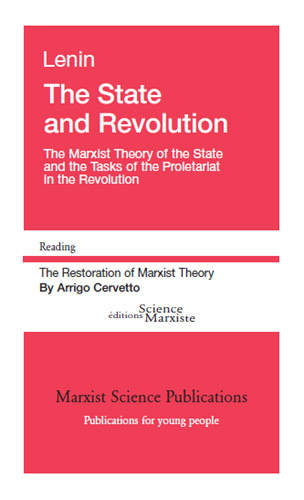
Lenin explained that in the decades of relatively peaceful development of capitalism, from 1871 to 1914, the social materials that would give birth to social-imperialism accumulated. This objective process emerged in various ideologies ; all of them had a common feature : « opportunistic prejudices » about the nature of the State. The revolutionary process was destined to be stifled by nihilism, maximalism, and inconclusiveness ; to meet with self-destruction, unless it got out of the quicksand of prejudices about the State.
The first imperialist world war produced the material conditions for revolution : in February 1917 the political crisis in Russia emerged in an acute form, leading to the fall of the autocracy and the birth of the most democratic of republics. What was arrived at was dual power. The parliament and governement co-existed with the soviets, the political shell for the most genuine expression of the revolutionary forces : the workers and poor peasants in uniform.
The Russian revolutionary labour movement had to operate politically within the framework of the most democratic republic history had ever produced. Without a revolutionary theory about the nature of the bourgeois State there could not be a revolutionary movement of opposition to the most efficient shell of this State – democracy.
The first imperialist world war produced the material conditions for revolution : in February 1917 the political crisis in Russia emerged in an acute form, leading to the fall of the autocracy and the birth of the most democratic of republics. What was arrived at was dual power. The parliament and governement co-existed with the soviets, the political shell for the most genuine expression of the revolutionary forces : the workers and poor peasants in uniform.
The Russian revolutionary labour movement had to operate politically within the framework of the most democratic republic history had ever produced. Without a revolutionary theory about the nature of the bourgeois State there could not be a revolutionary movement of opposition to the most efficient shell of this State – democracy.
Specificaties
Betrokkenen
- Auteur(s):
- Uitgeverij:
Inhoud
- Aantal bladzijden:
- 161
- Taal:
- Engels
Eigenschappen
- Productcode (EAN):
- 9782912639943
- Verschijningsdatum:
- 1/06/2017
- Uitvoering:
- Paperback
- Afmetingen:
- 120 mm x 190 mm
- Gewicht:
- 199 g


Alleen bij Standaard Boekhandel
+ 9 punten op je klantenkaart van Standaard Boekhandel
CADEAU

AANGERADEN


Beoordelingen
We publiceren alleen reviews die voldoen aan de voorwaarden voor reviews. Bekijk onze voorwaarden voor reviews.