


- Afhalen na 1 uur in een winkel met voorraad
- Gratis thuislevering in België vanaf € 30
- Ruim aanbod met 7 miljoen producten
- Afhalen na 1 uur in een winkel met voorraad
- Gratis thuislevering in België vanaf € 30
- Ruim aanbod met 7 miljoen producten





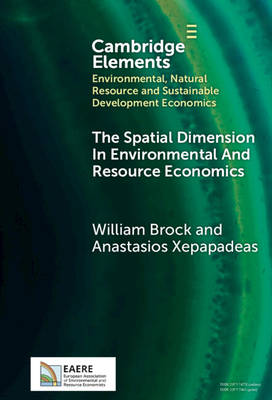
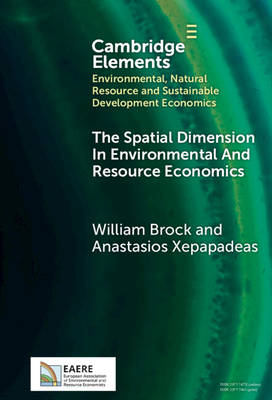
The Spatial Dimension In Environmental and Resource Economics
William Brock, Anastasios Xepapadeas
Hardcover | Engels | Elements in Environmental, Natural Resource and Sustainable Development Economic
€ 124,45
+ 248 punten
Uitvoering
Eenvoudig bestellen
Veilig betalen


Gratis thuislevering vanaf € 30 (via bpost)
Gratis levering in je Standaard Boekhandel
Omschrijving
Although the spatial dimension is embedded in most issues studied by environmental and resource economics, its incorporation into economic models is not widespread. As a result, significant aspects of important problems remain hidden, which could lead to policy failures. This Element fills this gap by exploring how space can be integrated into environmental and resource economics. The emergence of spatial patterns in economic models through Turing's mechanism is explained and an extension of Pontryagin's maximum principle under spatial dynamics is provided. Examples of the use of spatial dynamics serve to illustrate why space matters in environmental policy design. Moreover, the differentiation of policy when spatial transport mechanisms are considered is made clear. The tools presented, along with their applications, provide foundations for future research in spatial environmental and resource economics in which the underlying spatial dimension - which is very real - is fully taken into account.
Specificaties
Betrokkenen
- Auteur(s):
- Uitgeverij:
Inhoud
- Aantal bladzijden:
- 86
- Taal:
- Engels
- Reeks:
Eigenschappen
- Productcode (EAN):
- 9781009694391
- Verschijningsdatum:
- 11/06/2026
- Uitvoering:
- Hardcover
- Formaat:
- Genaaid
- Afmetingen:
- 152 mm x 229 mm
- Gewicht:
- 290 g


Alleen bij Standaard Boekhandel
+ 248 punten op je klantenkaart van Standaard Boekhandel
CADEAU

AANGERADEN


Beoordelingen
We publiceren alleen reviews die voldoen aan de voorwaarden voor reviews. Bekijk onze voorwaarden voor reviews.