


- Afhalen na 1 uur in een winkel met voorraad
- Gratis thuislevering in België vanaf € 30
- Ruim aanbod met 7 miljoen producten
- Afhalen na 1 uur in een winkel met voorraad
- Gratis thuislevering in België vanaf € 30
- Ruim aanbod met 7 miljoen producten





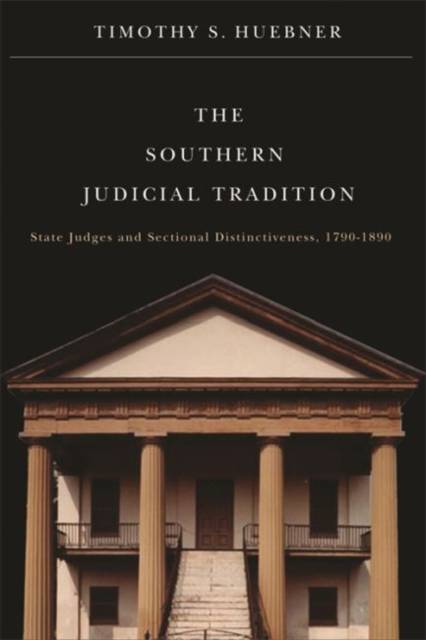
The Southern Judicial Tradition
State Judges and Sectional Distinctiveness, 1790-1890
Timothy S Huebner
€ 56,45
+ 112 punten
Omschrijving
This first book to examine the lives and work of nineteenth-century southern judges explores the emergence of a southern judiciary and the effects of regional peculiarities and attitudes on legal development. Drawing on the judicial opinions and private correspondence of six chief justices whose careers span both the region and the century, Timothy S. Huebner analyzes their conceptions of their roles and the substance of their opinions related to cases involving homicide, economic development, federalism, and race. Examining judges both on and off the bench--as formulators of law and as citizens whose lives were intertwined with southern values--Huebner reveals the tensions that sometimes arose out of loyalties to sectional principles and national professional consciousness. He exposes the myth of southern leniency in appellate homicide decisions and also shows how the southern judiciary contributed to and reflected larger trends in American legal development. This book adds to our understanding of both southern distinctiveness and American legal culture.
Specificaties
Betrokkenen
- Auteur(s):
- Uitgeverij:
Inhoud
- Aantal bladzijden:
- 280
- Taal:
- Engels
- Reeks:
Eigenschappen
- Productcode (EAN):
- 9780820332369
- Verschijningsdatum:
- 15/10/2008
- Uitvoering:
- Paperback
- Formaat:
- Trade paperback (VS)
- Afmetingen:
- 150 mm x 224 mm
- Gewicht:
- 453 g



Alleen bij Standaard Boekhandel
+ 112 punten op je klantenkaart van Standaard Boekhandel
Cadeau

AANGERADEN


Beoordelingen
We publiceren alleen reviews die voldoen aan de voorwaarden voor reviews. Bekijk onze voorwaarden voor reviews.