


- Afhalen na 1 uur in een winkel met voorraad
- Gratis thuislevering in België vanaf € 30
- Ruim aanbod met 7 miljoen producten
- Afhalen na 1 uur in een winkel met voorraad
- Gratis thuislevering in België vanaf € 30
- Ruim aanbod met 7 miljoen producten





€ 83,95
+ 167 punten
Eenvoudig bestellen
Veilig betalen


Gratis thuislevering vanaf € 30 (via bpost)
Gratis levering in je Standaard Boekhandel
Omschrijving
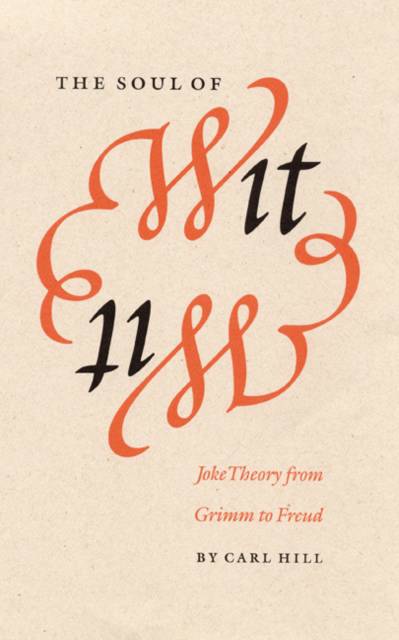
Witz first became a burning issue for German intellectuals after 1671 when le Père Dominique Bonhours in his Entretiens d'Artiste et d'Eugène informed them that they didn't have any. According to Bonhours, it wasn't really the Germans' fault that they were a little dim, it is just that they live in a cold climate and tend to be fat. A feud between French bel esprit and German Intellekt erupted that has persisted ever since. Scholarly investigations into the nature of the joke have traditionally been plagued by a bad conscience and invariably begin with an apology to the reader for taking time for such a frivolous subject. In breaking with this tradition, Hill places wit almost at the heart of the universe, tracing it from Genesis to the dawn of themodern age. Even if the reader is reluctant to grant Witz this metaphysical and world-historical status, it must at least be admitted that Witz cannot be dismissed as a just a joke. Witz can serve either builders or destroyers, defenders of the faith or heretics, diplomats or oafs, male chauvinists or radical feminists. Witz shows its volatility in setting up cultural, class, and gender boundaries just to smash them. Hill argues that there is something about Witz that makes it quintessential to the plight of modern culture. He views Witz as an ahistorical subject developing over time and transcending the lifespans and intentions of the authors who have wirtten with or about it. In Der Witz, for instance, Freud thougth he was describing the workings of a historical psychological process, but the material he works with betrays him. His examples twist, mock, and undermine the theories he makes about them. And though Fred wrote dismissively of it, there is a long history of Witztheorie from which his own sprang. It has a long history through which its meaning shifts many times. The very word Witz was fought over, sometimes sluggishly and between buffoons but often with a brilliance that gave it lustre.
Specificaties
Betrokkenen
- Auteur(s):
- Uitgeverij:
Inhoud
- Aantal bladzijden:
- 254
- Taal:
- Engels
- Reeks:
Eigenschappen
- Productcode (EAN):
- 9780803223691
- Verschijningsdatum:
- 1/12/1993
- Uitvoering:
- Hardcover
- Formaat:
- Genaaid
- Afmetingen:
- 146 mm x 237 mm
- Gewicht:
- 517 g


Alleen bij Standaard Boekhandel
+ 167 punten op je klantenkaart van Standaard Boekhandel
CADEAU

AANGERADEN


Beoordelingen
We publiceren alleen reviews die voldoen aan de voorwaarden voor reviews. Bekijk onze voorwaarden voor reviews.