


- Afhalen na 1 uur in een winkel met voorraad
- Gratis thuislevering in België vanaf € 30
- Ruim aanbod met 7 miljoen producten
- Afhalen na 1 uur in een winkel met voorraad
- Gratis thuislevering in België vanaf € 30
- Ruim aanbod met 7 miljoen producten





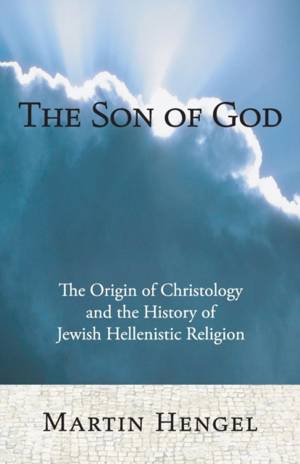
The Son of God
The Origin of Christology and the History of Jewish-Hellenistic Religion
Martin Hengel
Paperback | Engels
€ 18,45
+ 36 punten
Uitvoering
Omschrijving
This work significantly advances the critical discussion of New Testament Christology. Hengel examines the titles Son and God. He points toward an inner consistency and dynamic in the development of the doctrine of Christ in primitive Christianity as the movement proceeded from the Gospels' account of the death of Jesus to the high Christology present in the Pauline writings. Historical scholarship and theological -- one might even say dogmatic -- questions must not stand in unresolved contradiction. On the contrary, the historian misunderstands the nature of New Testament Christology if he does not grasp its theological concern and its inner consistency, while a dogmatic approach that does not take seriously the historical course of Christianity is in danger of becoming no more than abstract speculation. It is therefore vitally important to unite historical research and the theological search for truth.
Specificaties
Betrokkenen
- Auteur(s):
- Vertaler(s):
- Uitgeverij:
Inhoud
- Aantal bladzijden:
- 112
- Taal:
- Engels
Eigenschappen
- Productcode (EAN):
- 9781556352300
- Verschijningsdatum:
- 1/02/2007
- Uitvoering:
- Paperback
- Formaat:
- Trade paperback (VS)
- Afmetingen:
- 144 mm x 220 mm
- Gewicht:
- 149 g


Alleen bij Standaard Boekhandel
+ 36 punten op je klantenkaart van Standaard Boekhandel
Cadeau

AANGERADEN


Beoordelingen
We publiceren alleen reviews die voldoen aan de voorwaarden voor reviews. Bekijk onze voorwaarden voor reviews.