


- Afhalen na 1 uur in een winkel met voorraad
- Gratis thuislevering in België vanaf € 30
- Ruim aanbod met 7 miljoen producten
- Afhalen na 1 uur in een winkel met voorraad
- Gratis thuislevering in België vanaf € 30
- Ruim aanbod met 7 miljoen producten





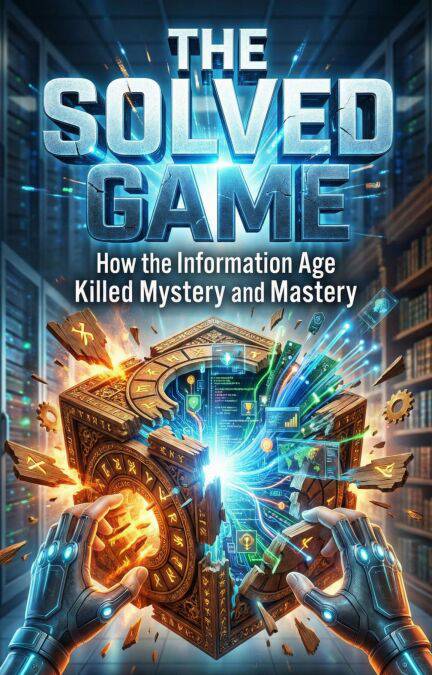
The Solved Game E-BOOK
How the Information Age Killed Mystery and Mastery
Alex Mercer
E-book | Engels
€ 4,99
+ 4 punten
Omschrijving
In the 90s, getting stuck in a video game meant asking friends or waiting for a magazine. Today, the optimal strategy for every game is available on a Wiki before the game even launches. Game journalist Alex Mercer explores "The Solved Game," a phenomenon where dataminers, guides, and the obsession with "meta" efficiency have stripped gaming of wonder.
Mercer argues that players are now optimizing the fun out of their own experiences. Instead of exploring, they follow a YouTube walkthrough to get the "best" loot immediately. He analyzes the rise of "theory-crafting" communities and how developers are forced to design increasingly obscure secrets just to keep them hidden for more than an hour.
The book also touches on the psychological cost: the anxiety of playing "sub-optimally" and the loss of the communal discovery experience. It is a nostalgic yet critical look at how the internet solved everything, and why we miss the days when we didn't know what was over the next hill.
Mercer argues that players are now optimizing the fun out of their own experiences. Instead of exploring, they follow a YouTube walkthrough to get the "best" loot immediately. He analyzes the rise of "theory-crafting" communities and how developers are forced to design increasingly obscure secrets just to keep them hidden for more than an hour.
The book also touches on the psychological cost: the anxiety of playing "sub-optimally" and the loss of the communal discovery experience. It is a nostalgic yet critical look at how the internet solved everything, and why we miss the days when we didn't know what was over the next hill.
Specificaties
Betrokkenen
- Auteur(s):
- Uitgeverij:
Inhoud
- Aantal bladzijden:
- 173
- Taal:
- Engels
Eigenschappen
- Productcode (EAN):
- 9783565212934
- Verschijningsdatum:
- 29/01/2026
- Uitvoering:
- E-book
- Formaat:
- ePub


Alleen bij Standaard Boekhandel
+ 4 punten op je klantenkaart van Standaard Boekhandel
Cadeau

AANGERADEN


Beoordelingen
We publiceren alleen reviews die voldoen aan de voorwaarden voor reviews. Bekijk onze voorwaarden voor reviews.