


- Afhalen na 1 uur in een winkel met voorraad
- Gratis thuislevering in België vanaf € 30
- Ruim aanbod met 7 miljoen producten
- Afhalen na 1 uur in een winkel met voorraad
- Gratis thuislevering in België vanaf € 30
- Ruim aanbod met 7 miljoen producten





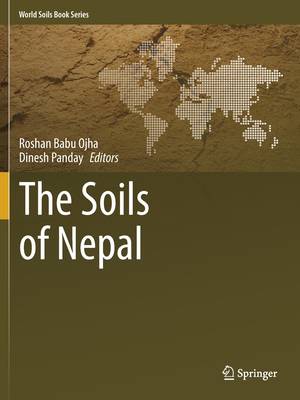
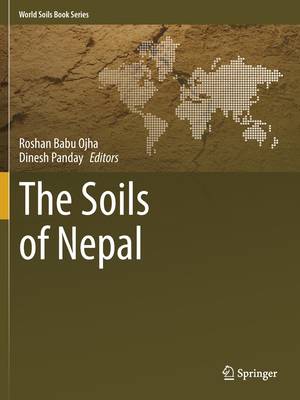
The Soils of Nepal
€ 173,45
+ 346 punten
Omschrijving
This book publishes consolidated information on the soils of Nepal from all possible sources. The Survey Department, Government of Nepal, conducted two national scale soil survey projects to classify soils of Nepal (Land Resource Mapping Project ended in 1985, and National Land Use Planning Project ended in 2021). Both projects adopted the United States Department of Agriculture system of soil classification. Besides, National Soil Science Research Center (previously known as Soil Science Division) of Nepal Agricultural Research Council and Soil Management Directorate, Department of Agriculture, also worked on soils of Nepal. To date, the information on the soils of Nepal is not published in well-documented form but has been reported widely as gray literature (project report or government report) or peer-review articles.
'The Soils of Nepal' is a part of 'World Soils Book Series' which constitutes twelve chapters-covering broad aspects such as soil research history, climate, geology, soil classification and mapping, and soil fertility. Furthermore, information about soil properties and relation between soil constituents of the dominant soil types of Nepal and their scope of use in the context of land use are described. This book also tries to simplify the intricate relationship among soil, culture, and people. Each chapter contains a comprehensive, richly illustrated, and up-to-date overview of the soils of Nepal. We believe it fulfils a quest for a global audience including students, educators, extension workers, and soil scientists, who are interested to know the young soils of Nepal.
'The Soils of Nepal' is a part of 'World Soils Book Series' which constitutes twelve chapters-covering broad aspects such as soil research history, climate, geology, soil classification and mapping, and soil fertility. Furthermore, information about soil properties and relation between soil constituents of the dominant soil types of Nepal and their scope of use in the context of land use are described. This book also tries to simplify the intricate relationship among soil, culture, and people. Each chapter contains a comprehensive, richly illustrated, and up-to-date overview of the soils of Nepal. We believe it fulfils a quest for a global audience including students, educators, extension workers, and soil scientists, who are interested to know the young soils of Nepal.
Specificaties
Betrokkenen
- Uitgeverij:
Inhoud
- Aantal bladzijden:
- 161
- Taal:
- Engels
- Reeks:
Eigenschappen
- Productcode (EAN):
- 9783030810016
- Verschijningsdatum:
- 15/10/2022
- Uitvoering:
- Paperback
- Formaat:
- Trade paperback (VS)
- Afmetingen:
- 210 mm x 279 mm
- Gewicht:
- 417 g

Alleen bij Standaard Boekhandel
+ 346 punten op je klantenkaart van Standaard Boekhandel
Cadeau

AANGERADEN


Beoordelingen
We publiceren alleen reviews die voldoen aan de voorwaarden voor reviews. Bekijk onze voorwaarden voor reviews.