


- Afhalen na 1 uur in een winkel met voorraad
- Gratis thuislevering in België vanaf € 30
- Ruim aanbod met 7 miljoen producten
- Afhalen na 1 uur in een winkel met voorraad
- Gratis thuislevering in België vanaf € 30
- Ruim aanbod met 7 miljoen producten





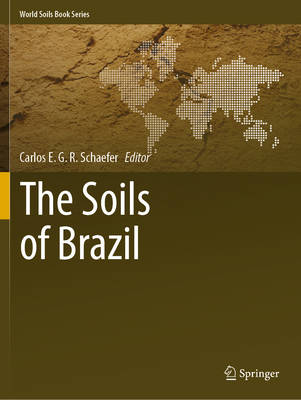
The Soils of Brazil
€ 171,45
+ 342 punten
Omschrijving
This book represents the first comprehensive edition, in English, on the soils of Brazil, in the challenge of illustrating all the biomes of a country of truly continental dimension. In addition to presenting the first geosystemic view of Brazilian soils, in all geological, geomorphological and environmental aspects, the book also makes a key contribution to the discussion of current topics in Pedology, such as Anthrosols, Technosols, Soil Management trends and sustainability, Pedometrics and advanced techniques of digital soil mapping. The soils of Brazil were conveniently stratified into sectors and treated within the different biomes, without neglecting any area of the Brazilian territory.
Considering the aspects of the landscape of occurrence, climates, geomorphology and geology, each pedological region was abundantly documented with soil profile data and many fine original, three-dimensional illustrations and diagrams, made with care by the authors. Among the regions, the most important are the forested Amazon, the Central Plateau with Cerrados, the Caatingas of the northeastern semi-arid region, the Atlantic Forest in all known variants; in addition, the Restingas, Mangroves, Oceanic Islands, Wetlands of the Pantanal and the subtropical regions of the Pampa and Matas de Araucaria. The book is of great importance as the first published work on Brazilian soils, but it is of great interest to geologists and geomorphologists who study the tropics and subtropics, due to the novelty and scope of the work.
Considering the aspects of the landscape of occurrence, climates, geomorphology and geology, each pedological region was abundantly documented with soil profile data and many fine original, three-dimensional illustrations and diagrams, made with care by the authors. Among the regions, the most important are the forested Amazon, the Central Plateau with Cerrados, the Caatingas of the northeastern semi-arid region, the Atlantic Forest in all known variants; in addition, the Restingas, Mangroves, Oceanic Islands, Wetlands of the Pantanal and the subtropical regions of the Pampa and Matas de Araucaria. The book is of great importance as the first published work on Brazilian soils, but it is of great interest to geologists and geomorphologists who study the tropics and subtropics, due to the novelty and scope of the work.
Specificaties
Betrokkenen
- Uitgeverij:
Inhoud
- Aantal bladzijden:
- 488
- Taal:
- Engels
- Reeks:
Eigenschappen
- Productcode (EAN):
- 9783031202551
- Verschijningsdatum:
- 23/04/2024
- Uitvoering:
- Paperback
- Afmetingen:
- 210 mm x 279 mm

Alleen bij Standaard Boekhandel
+ 342 punten op je klantenkaart van Standaard Boekhandel
Cadeau

AANGERADEN


Beoordelingen
We publiceren alleen reviews die voldoen aan de voorwaarden voor reviews. Bekijk onze voorwaarden voor reviews.