


- Afhalen na 1 uur in een winkel met voorraad
- Gratis thuislevering in België vanaf € 30
- Ruim aanbod met 7 miljoen producten
- Afhalen na 1 uur in een winkel met voorraad
- Gratis thuislevering in België vanaf € 30
- Ruim aanbod met 7 miljoen producten





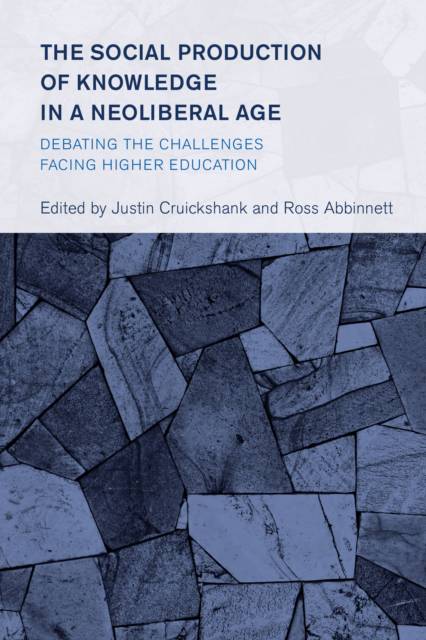
The Social Production of Knowledge in a Neoliberal Age
Debating the Challenges Facing Higher Education
€ 254,45
+ 508 punten
Omschrijving
Higher education exposes a key paradox of neoliberalism. The project of neoliberalism was said to be that of rolling back the state to liberate individuals, by replacing government bureaucracy with the free market. Rather than have the market serve individuals however, individuals were to serve the market. The marketisation 'reforms' in higher education, which sought to reshape knowledge production, with students investing in human capital and academics producing 'transferable' research, to make higher education of use to the economy, has resulted in extensive government bureaucracy and oppressive managerialist bureaucracy which is inefficient and expensive. Neoliberalism has always had authoritarian aspects and these are now coming to bear on universities. The state does not want critical and informed graduate citizens, but a hollowed out public sphere defined by consumption, willing servitude to the market and deference to state power. Attempts to reshape universities with bureaucracy are now accompanied by a culture war, attacking the production of critical knowledge. The authors in this book explore these issues and the possibilities for resistance and progressive change.
Specificaties
Betrokkenen
- Uitgeverij:
Inhoud
- Aantal bladzijden:
- 414
- Taal:
- Engels
- Reeks:
Eigenschappen
- Productcode (EAN):
- 9781538161401
- Verschijningsdatum:
- 4/04/2022
- Uitvoering:
- Hardcover
- Formaat:
- Genaaid
- Afmetingen:
- 152 mm x 229 mm
- Gewicht:
- 721 g


Alleen bij Standaard Boekhandel
+ 508 punten op je klantenkaart van Standaard Boekhandel
Cadeau

AANGERADEN


Beoordelingen
We publiceren alleen reviews die voldoen aan de voorwaarden voor reviews. Bekijk onze voorwaarden voor reviews.