


- Afhalen na 1 uur in een winkel met voorraad
- Gratis thuislevering in België vanaf € 30
- Ruim aanbod met 7 miljoen producten
- Afhalen na 1 uur in een winkel met voorraad
- Gratis thuislevering in België vanaf € 30
- Ruim aanbod met 7 miljoen producten





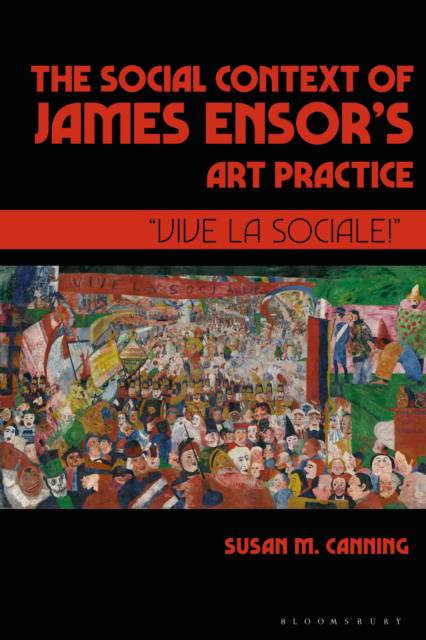
The Social Context of James Ensor’s Art Practice:
“Vive La Sociale!”
Susan M. Canning
Paperback | Engels
€ 36,45
+ 72 punten
Omschrijving
“Vive la Sociale”: This rousing, revolutionary statement, written on a bright red banner across the top of James Ensor’s Christ’s Entry into Brussels in 1889, served as a visual manifesto and call to action by the Belgian artist (1860-1949), one that announced with an insistent, public voice the centrality of his art practice to the cultural discourse of modern Belgium. This provocative declaration serves as the title for this new study of Ensor’s art focusing on its social discourse and the artist’s interaction with and at times satirical encounter with his contemporary milieu.
Rather than the alienated and traumatized Expressionist given preference in modern art history, Ensor is presented here as an artist of agency and purpose whose art practice engaged the issues and concerns of middle class Belgian life, society and politics and was informed by the values and class, race and gendered perspectives of his time. Ensor’s radical vision and oppositional strategy of resistance, self-fashioning and performance remains relevant. This book with its timely, nuanced reading of the art and career of this often misunderstood “artist’s artist”, invites a re-evaluation not only of Ensor’s social context and expressive critique but also his unique contribution to modernist art practice.
Rather than the alienated and traumatized Expressionist given preference in modern art history, Ensor is presented here as an artist of agency and purpose whose art practice engaged the issues and concerns of middle class Belgian life, society and politics and was informed by the values and class, race and gendered perspectives of his time. Ensor’s radical vision and oppositional strategy of resistance, self-fashioning and performance remains relevant. This book with its timely, nuanced reading of the art and career of this often misunderstood “artist’s artist”, invites a re-evaluation not only of Ensor’s social context and expressive critique but also his unique contribution to modernist art practice.
Specificaties
Betrokkenen
- Auteur(s):
- Uitgeverij:
Inhoud
- Aantal bladzijden:
- 272
- Taal:
- Engels
Eigenschappen
- Productcode (EAN):
- 9781350469914
- Verschijningsdatum:
- 2/04/2024
- Uitvoering:
- Paperback
- Afmetingen:
- 162 mm x 234 mm
- Gewicht:
- 700 g


Alleen bij Standaard Boekhandel
+ 72 punten op je klantenkaart van Standaard Boekhandel
Cadeau

AANGERADEN


Beoordelingen
We publiceren alleen reviews die voldoen aan de voorwaarden voor reviews. Bekijk onze voorwaarden voor reviews.