


- Afhalen na 1 uur in een winkel met voorraad
- Gratis thuislevering in België vanaf € 30
- Ruim aanbod met 7 miljoen producten
- Afhalen na 1 uur in een winkel met voorraad
- Gratis thuislevering in België vanaf € 30
- Ruim aanbod met 7 miljoen producten





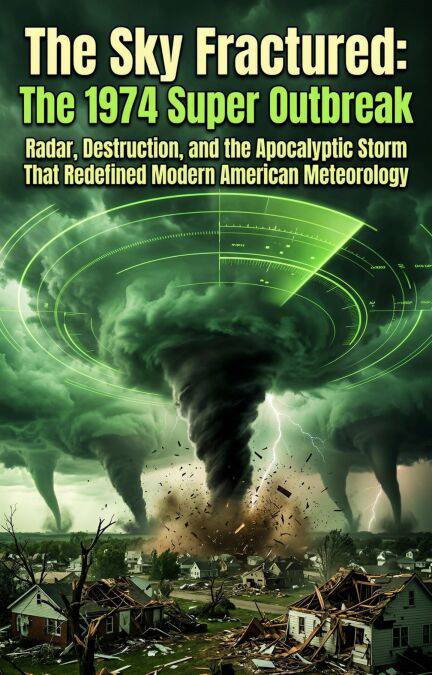
The Sky Fractured: The 1974 Super Outbreak E-BOOK
Radar, Destruction, and the Apocalyptic Storm That Redefined Modern American Meteorology
Eric Nelson
E-book | Engels
€ 4,99
+ 4 punten
Omschrijving
On April 3, 1974, the atmosphere over the American Midwest violently collapsed. In less than 24 hours, an unprecedented and terrifying total of 148 tornadoes—including thirty F4 and F5 monsters—touched down across 13 states. Entire towns were wiped off the map before the warning sirens could even be sounded. The 1974 Super Outbreak remains one of the most violent meteorological events in recorded history.
This book explores the brutal physics of the outbreak and its profound technological legacy. At the time, the National Weather Service relied on rudimentary radar that could only see rain, not rotation. Forecasters watched helplessly as green blobs on their screens suddenly leveled communities. The catastrophic death toll forced an immediate, massive influx of federal funding into atmospheric science.
We detail the frantic, post-disaster engineering that birthed the modern NEXRAD Doppler radar network—a technology specifically designed to detect the invisible, internal wind shear of a storm cell minutes before a tornado ever touches the ground.
Witness the storm that changed the sky. A gripping historical account of the apocalyptic weather event that forced humanity to invent a way to see the wind.
This book explores the brutal physics of the outbreak and its profound technological legacy. At the time, the National Weather Service relied on rudimentary radar that could only see rain, not rotation. Forecasters watched helplessly as green blobs on their screens suddenly leveled communities. The catastrophic death toll forced an immediate, massive influx of federal funding into atmospheric science.
We detail the frantic, post-disaster engineering that birthed the modern NEXRAD Doppler radar network—a technology specifically designed to detect the invisible, internal wind shear of a storm cell minutes before a tornado ever touches the ground.
Witness the storm that changed the sky. A gripping historical account of the apocalyptic weather event that forced humanity to invent a way to see the wind.
Specificaties
Betrokkenen
- Auteur(s):
- Uitgeverij:
Inhoud
- Aantal bladzijden:
- 166
- Taal:
- Engels
Eigenschappen
- Productcode (EAN):
- 9783565380053
- Verschijningsdatum:
- 1/04/2026
- Uitvoering:
- E-book
- Formaat:
- ePub


Alleen bij Standaard Boekhandel
+ 4 punten op je klantenkaart van Standaard Boekhandel
Cadeau

AANGERADEN


Beoordelingen
We publiceren alleen reviews die voldoen aan de voorwaarden voor reviews. Bekijk onze voorwaarden voor reviews.