


- Afhalen na 1 uur in een winkel met voorraad
- Gratis thuislevering in België vanaf € 30
- Ruim aanbod met 7 miljoen producten
- Afhalen na 1 uur in een winkel met voorraad
- Gratis thuislevering in België vanaf € 30
- Ruim aanbod met 7 miljoen producten





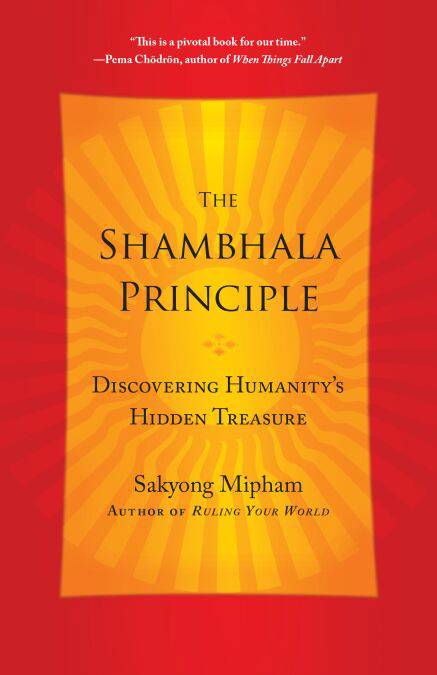
The Shambhala Principle E-BOOK
Discovering Humanity's Hidden Treasure
Sakyong Mipham
E-book | Engels
€ 5,77
+ 5 punten
Omschrijving
One of Tibet's highest and most respected lamas elucidates for us the principles of Shambhala, or the path to happiness, set down by his legendary father, Chögyam Trungpa Rinpoche.
Dear Reader,
We humans have come to a crossroads in our history: we can either destroy the world or create a good future. The Shambhala Principle offers the principle of basic goodness as a way of addressing the personal and social challenges that we face. Do we, as humans, have confidence in the basic goodness of humanity, as well as of society itself? As a Tibetan lama and spiritual leader, this strikes me as our most compelling global issue.
The book revolves around a dialogue with my father, the legendary Chögyam Trungpa. Whether his responses were direct or mystical, he continuously returned to the topics of basic goodness and enlightened society. Not only did he show me how I could become confident in their existence through awareness and meditation, he also taught me how basic goodness is a socially viable standard that could stabilize and transform our world.
However, this book is not a memoir, or even a message. It is an invitation to readers to reflect on their own basic goodness and the basic goodness of society, and then contemplate the question, Can we rouse our energy and confidence to create a good world that is founded on this principle?
I encourage you to join me in this contemplation.
—Sakyong Mipham
Dear Reader,
We humans have come to a crossroads in our history: we can either destroy the world or create a good future. The Shambhala Principle offers the principle of basic goodness as a way of addressing the personal and social challenges that we face. Do we, as humans, have confidence in the basic goodness of humanity, as well as of society itself? As a Tibetan lama and spiritual leader, this strikes me as our most compelling global issue.
The book revolves around a dialogue with my father, the legendary Chögyam Trungpa. Whether his responses were direct or mystical, he continuously returned to the topics of basic goodness and enlightened society. Not only did he show me how I could become confident in their existence through awareness and meditation, he also taught me how basic goodness is a socially viable standard that could stabilize and transform our world.
However, this book is not a memoir, or even a message. It is an invitation to readers to reflect on their own basic goodness and the basic goodness of society, and then contemplate the question, Can we rouse our energy and confidence to create a good world that is founded on this principle?
I encourage you to join me in this contemplation.
—Sakyong Mipham
Specificaties
Betrokkenen
- Auteur(s):
- Uitgeverij:
Inhoud
- Aantal bladzijden:
- 224
- Taal:
- Engels
Eigenschappen
- Productcode (EAN):
- 9780770437442
- Verschijningsdatum:
- 6/05/2013
- Uitvoering:
- E-book
- Beveiligd met:
- Adobe DRM
- Formaat:
- ePub


Alleen bij Standaard Boekhandel
+ 5 punten op je klantenkaart van Standaard Boekhandel
Cadeau

AANGERADEN


Beoordelingen
We publiceren alleen reviews die voldoen aan de voorwaarden voor reviews. Bekijk onze voorwaarden voor reviews.