


- Afhalen na 1 uur in een winkel met voorraad
- Gratis thuislevering in België vanaf € 30
- Ruim aanbod met 7 miljoen producten
- Afhalen na 1 uur in een winkel met voorraad
- Gratis thuislevering in België vanaf € 30
- Ruim aanbod met 7 miljoen producten





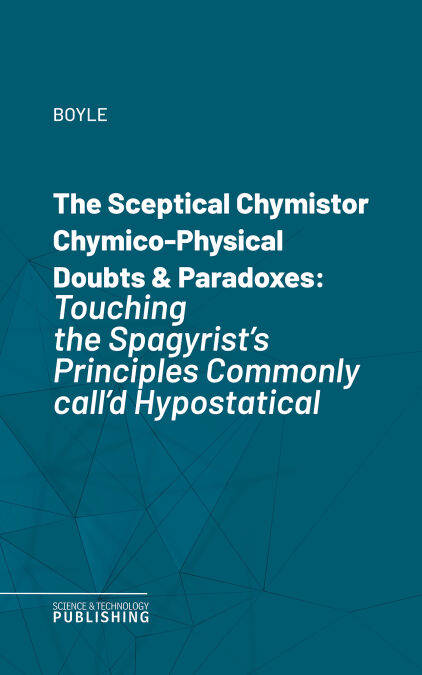
The Sceptical Chymistor Chymico-Physical Doubts & Paradoxes E-BOOK
Touching the Spagyrist's Principles Commonly call'd Hypostatical
Boyle
E-book | Engels
€ 19,99
+ 19 punten
Omschrijving
The Sceptical Chymist: or Chymico-Physical Doubts & Paradoxes Touching the Spagyrist's Principles Commonly call'd Hypostatical is a groundbreaking scientific treatise written by Robert Boyle and first published in 1661. This seminal work is widely regarded as a foundational text in the history of chemistry, marking the transition from alchemy to modern chemical science. In the book, Boyle challenges the prevailing theories of his time, particularly the classical notion that all matter is composed of the four elements—earth, air, fire, and water—or the three alchemical principles—salt, sulfur, and mercury—commonly accepted by the spagyrists or alchemists. Structured as a lively dialogue among several interlocutors, the book presents a series of rigorous arguments and experiments that question the validity of these traditional principles. Boyle employs a skeptical and empirical approach, emphasizing observation, experimentation, and logical reasoning over dogma and speculation. Through detailed discussions and thought-provoking paradoxes, he exposes the inconsistencies and inadequacies of the hypostatical principles, advocating instead for a corpuscular or particulate theory of matter, which would later become central to modern chemistry. Boyle's work is notable for its clear and methodical style, as well as its commitment to scientific inquiry and open debate. The Sceptical Chymist not only critiques the philosophical underpinnings of alchemy but also lays the groundwork for the development of chemical analysis and the scientific method. The book's influence extends far beyond its immediate context, shaping the course of scientific thought and inspiring generations of chemists and natural philosophers. Today, it remains a classic of scientific literature, celebrated for its intellectual rigor, historical significance, and enduring impact on the evolution of chemistry.
Specificaties
Betrokkenen
- Auteur(s):
- Uitgeverij:
Inhoud
- Taal:
- Engels
Eigenschappen
- Productcode (EAN):
- 9782528103975
- Verschijningsdatum:
- 31/08/2025
- Uitvoering:
- E-book
- Formaat:
- ePub


Alleen bij Standaard Boekhandel
+ 19 punten op je klantenkaart van Standaard Boekhandel
AANGERADEN


Beoordelingen
We publiceren alleen reviews die voldoen aan de voorwaarden voor reviews. Bekijk onze voorwaarden voor reviews.