


- Afhalen na 1 uur in een winkel met voorraad
- Gratis thuislevering in België vanaf € 30
- Ruim aanbod met 7 miljoen producten
- Afhalen na 1 uur in een winkel met voorraad
- Gratis thuislevering in België vanaf € 30
- Ruim aanbod met 7 miljoen producten





€ 39,42
+ 39 punten
Uitvoering
Omschrijving
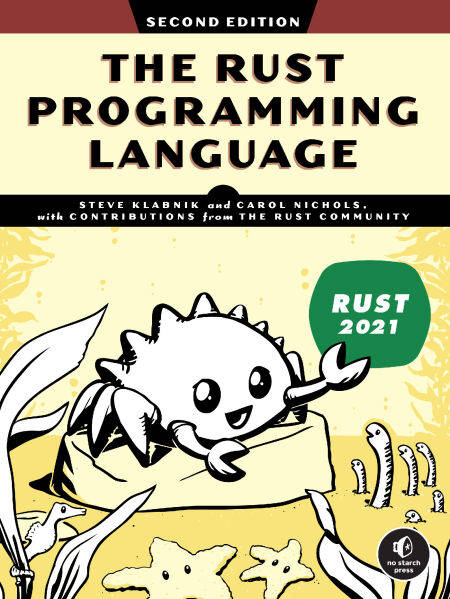
With over 50,000 copies sold, The Rust Programming Language is the quintessential guide to programming in Rust. Thoroughly updated to Rust’s latest version, this edition is considered the language’s official documentation.
The Rust Programming Language "covers everything you could want to know about the language."—Stack Overflow
Rust has been repeatedly voted "Most Loved Language" on the StackOverflow Developer Survey.
The Rust Programming Language, 2nd Edition is the official guide to Rust 2021: an open source systems programming language that will help you write faster, more reliable software. Rust provides control of low-level details along with high-level ergonomics, allowing you to improve productivity and eliminate the hassle traditionally associated with low-level languages.
Klabnik and Nichols, alumni of the Rust Core Team, share their knowledge to help you get the most out of Rust’s features so that you can create robust and scalable programs. You’ll begin with basics like creating functions, choosing data types, and binding variables, then move on to more advanced concepts, such as:
Ownership and borrowing, lifetimes, generics, traits, and trait objects to communicate your program’s constraints to the compiler Smart pointers and multithreading, and how ownership interacts with them to enable fearless concurrency How to use Cargo, Rust’s built-in package manager, to build, document your code, and manage dependencies The best ways to test, handle errors, refactor, and take advantage of expressive pattern matching
In addition to the countless code examples, you’ll find three chapters dedicated to building complete projects: a number-guessing game, a Rust implementation of a command line tool, and a multithreaded server.
The Rust Programming Language "covers everything you could want to know about the language."—Stack Overflow
Rust has been repeatedly voted "Most Loved Language" on the StackOverflow Developer Survey.
The Rust Programming Language, 2nd Edition is the official guide to Rust 2021: an open source systems programming language that will help you write faster, more reliable software. Rust provides control of low-level details along with high-level ergonomics, allowing you to improve productivity and eliminate the hassle traditionally associated with low-level languages.
Klabnik and Nichols, alumni of the Rust Core Team, share their knowledge to help you get the most out of Rust’s features so that you can create robust and scalable programs. You’ll begin with basics like creating functions, choosing data types, and binding variables, then move on to more advanced concepts, such as:
Ownership and borrowing, lifetimes, generics, traits, and trait objects to communicate your program’s constraints to the compiler Smart pointers and multithreading, and how ownership interacts with them to enable fearless concurrency How to use Cargo, Rust’s built-in package manager, to build, document your code, and manage dependencies The best ways to test, handle errors, refactor, and take advantage of expressive pattern matching
In addition to the countless code examples, you’ll find three chapters dedicated to building complete projects: a number-guessing game, a Rust implementation of a command line tool, and a multithreaded server.
Specificaties
Betrokkenen
- Auteur(s):
- Uitgeverij:
Inhoud
- Aantal bladzijden:
- 560
- Taal:
- Engels
Eigenschappen
- Productcode (EAN):
- 9781718503113
- Verschijningsdatum:
- 27/02/2023
- Uitvoering:
- E-book
- Formaat:
- ePub


Alleen bij Standaard Boekhandel
+ 39 punten op je klantenkaart van Standaard Boekhandel
Cadeau

AANGERADEN


Beoordelingen
We publiceren alleen reviews die voldoen aan de voorwaarden voor reviews. Bekijk onze voorwaarden voor reviews.