


- Afhalen na 1 uur in een winkel met voorraad
- Gratis thuislevering in België vanaf € 30
- Ruim aanbod met 7 miljoen producten
- Afhalen na 1 uur in een winkel met voorraad
- Gratis thuislevering in België vanaf € 30
- Ruim aanbod met 7 miljoen producten





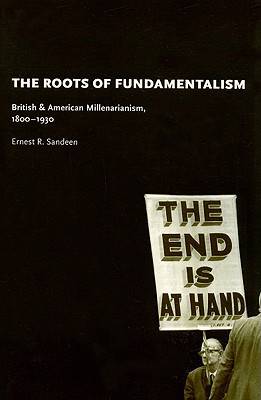
The Roots of Fundamentalism
British and American Millenarianism, 1800-1930
Ernest R Sandeen
Paperback | Engels
€ 54,95
+ 109 punten
Omschrijving
Ernest Sandeen's Roots of Fundamentalism remains a landmark work in the history of religion. A National Book Award finalist, it was the first full-length study to present an intellectual historical critique of the Fundamentalist movement in America. Sandeen argues that our understanding of this movement has been grievously distorted by the Fundamentalist-Modernist debate of the 1920s, as symbolized by William Jennings Bryan and the Scopes trial. Rather than viewing Fundamentalism as a chiefly sociological phenomenon of the 1920s, Sandeen argues from a transatlantic perspective that the Fundamentalist movement "was a self-conscious, structured, long-lived dynamic entity" that had its origins in Anglo-American millenarian thought and movements of the nineteenth century.
"All historians need to face the issues [this book] raises. Serious theological discussion of Fundamentalism tends to be neglected because it is intellectually unfashionable: Mr. Sandeen shows that for the historian such neglect is a luxury he cannot afford."-David M. Thompson, English Historical Review "Sandeen's 'new approach to Fundamentalism' eschews the common tendency to see the movement as parochially American, rurally based, and essentially a phenomenon of the twenties. . . . It is a highly valuable addition to American and-more singularly-to comparative theological history."-William R. Hutchinson, Journal of American History
"All historians need to face the issues [this book] raises. Serious theological discussion of Fundamentalism tends to be neglected because it is intellectually unfashionable: Mr. Sandeen shows that for the historian such neglect is a luxury he cannot afford."-David M. Thompson, English Historical Review "Sandeen's 'new approach to Fundamentalism' eschews the common tendency to see the movement as parochially American, rurally based, and essentially a phenomenon of the twenties. . . . It is a highly valuable addition to American and-more singularly-to comparative theological history."-William R. Hutchinson, Journal of American History
Specificaties
Betrokkenen
- Auteur(s):
- Uitgeverij:
Inhoud
- Aantal bladzijden:
- 336
- Taal:
- Engels
Eigenschappen
- Productcode (EAN):
- 9780226734682
- Verschijningsdatum:
- 1/11/2008
- Uitvoering:
- Paperback
- Formaat:
- Trade paperback (VS)
- Afmetingen:
- 152 mm x 224 mm
- Gewicht:
- 476 g


Alleen bij Standaard Boekhandel
+ 109 punten op je klantenkaart van Standaard Boekhandel
Cadeau

AANGERADEN


Beoordelingen
We publiceren alleen reviews die voldoen aan de voorwaarden voor reviews. Bekijk onze voorwaarden voor reviews.