


- Afhalen na 1 uur in een winkel met voorraad
- Gratis thuislevering in België vanaf € 30
- Ruim aanbod met 7 miljoen producten
- Afhalen na 1 uur in een winkel met voorraad
- Gratis thuislevering in België vanaf € 30
- Ruim aanbod met 7 miljoen producten





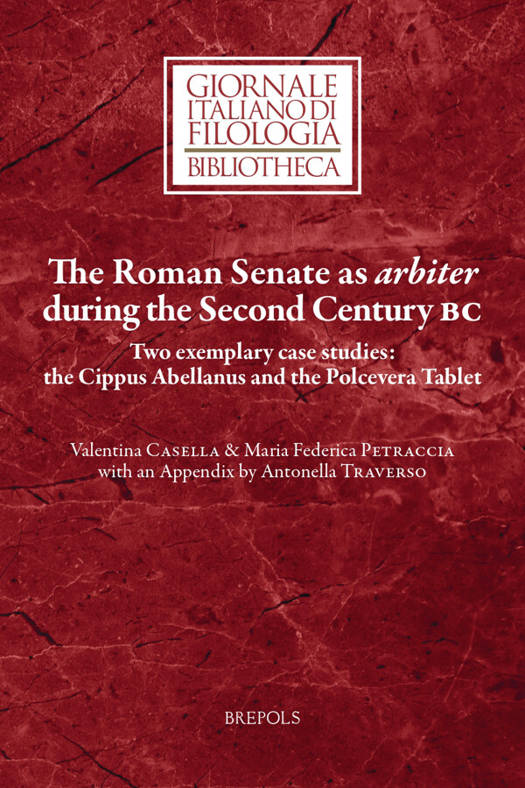
The Roman Senate as Arbiter During the Second Century BC
Two Exemplary Case Studies: The Cippus Abellanus and the Polcevera Tablet
V Casella, M F Petraccia
€ 79,50
+ 159 punten
Omschrijving
In the wider context of the border conflicts that involve Rome as a third authority super partes, for which there is evidence already in the second century BC, two epigraphic documents stand out for the peculiarities distinguishing them from all others: the so-called Polcevera Tablet (concerning a dispute between Genuates and Viturii Langenses) and the Cippus Abellanus (related to a border dispute between Nolani and Abellani and written in Oscan). They make us aware of the political and municipal dynamics underlying the complex principle of Roman arbitration, often required to resolve territorial disputes, which were gradually evolving as Rome opened up to the East. What role did the Roman Senate play in such disputes? What exactly was the function of the referees sent by the City to settle the disputes with a super partes judgment? What was the importance of the agrarian reform of the Gracchi and the realisation of road axes in the acuity of such antagonisms? These are the questions to which this study tries to provide an answer.
Specificaties
Betrokkenen
- Auteur(s):
- Uitgeverij:
Inhoud
- Aantal bladzijden:
- 256
- Taal:
- Engels, Latijn, Italiaans
- Reeks:
- Reeksnummer:
- nr. 21
Eigenschappen
- Productcode (EAN):
- 9782503586885
- Verschijningsdatum:
- 23/12/2019
- Uitvoering:
- Paperback
- Formaat:
- Trade paperback (VS)
- Afmetingen:
- 152 mm x 234 mm
- Gewicht:
- 430 g


Alleen bij Standaard Boekhandel
+ 159 punten op je klantenkaart van Standaard Boekhandel
CADEAU

AANGERADEN


Beoordelingen
We publiceren alleen reviews die voldoen aan de voorwaarden voor reviews. Bekijk onze voorwaarden voor reviews.