


- Afhalen na 1 uur in een winkel met voorraad
- Gratis thuislevering in België vanaf € 30
- Ruim aanbod met 7 miljoen producten
- Afhalen na 1 uur in een winkel met voorraad
- Gratis thuislevering in België vanaf € 30
- Ruim aanbod met 7 miljoen producten





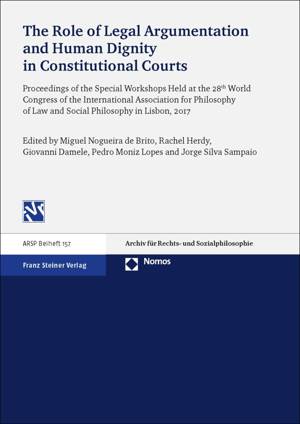
The Role of Legal Argumentation and Human Dignity in Constitutional Courts
Proceedings of the Special Workshops Held at the 28th World Congress of the International Association for Philosophy of Law and Social Philosophy in Lisbon, 2017
€ 59,95
+ 119 punten
Omschrijving
The legal argumentation of constitutional courts, for instance on human dignity, has been in the centre of interest both from theoretical and practical perspectives. This book addresses the role of legal argumentation at first in general, covering empirical and comparative perspectives on constitutional argumentative practices. It also comprises a comparative assessment of constitutional argumentation versus the arguments deployed by other courts as well as by decision-makers. Secondly, the book focuses on how constitutional courts reason with human dignity. This concept takes many different shapes, though very rarely in an objective fashion. It is embedded in several western constitutions, although constitutional courts and scholars tend to disagree on its meaning and content. Finally, the book aims to shed light on the controversial topic of human dignity from a normative and philosophical perspective.
Specificaties
Betrokkenen
- Uitgeverij:
Inhoud
- Aantal bladzijden:
- 239
- Taal:
- Engels
- Reeks:
- Reeksnummer:
- nr. 157
Eigenschappen
- Productcode (EAN):
- 9783515122351
- Verschijningsdatum:
- 22/01/2019
- Uitvoering:
- Paperback
- Formaat:
- Trade paperback (VS)
- Afmetingen:
- 170 mm x 239 mm
- Gewicht:
- 407 g

Alleen bij Standaard Boekhandel
+ 119 punten op je klantenkaart van Standaard Boekhandel
Wedstrijd


Beoordelingen
We publiceren alleen reviews die voldoen aan de voorwaarden voor reviews. Bekijk onze voorwaarden voor reviews.