


- Afhalen na 1 uur in een winkel met voorraad
- Gratis thuislevering in België vanaf € 30
- Ruim aanbod met 7 miljoen producten
- Afhalen na 1 uur in een winkel met voorraad
- Gratis thuislevering in België vanaf € 30
- Ruim aanbod met 7 miljoen producten





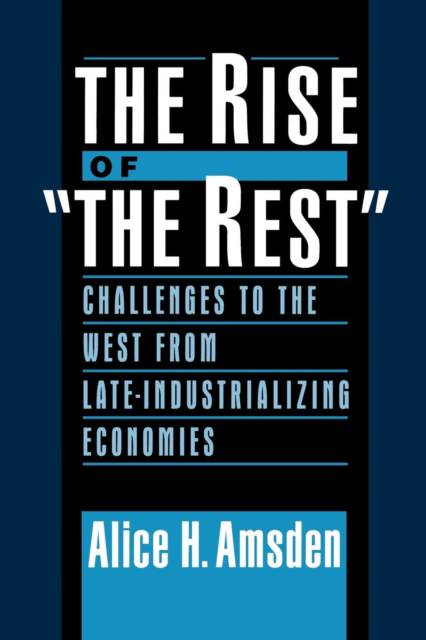
The Rise of "The Rest"
Challenges to the West from Late-Industrializing Economies
Alice H Amsden
Paperback | Engels
€ 109,95
+ 219 punten
Omschrijving
After World War II a select number of countries outside Japan and the West--those that Alice Amsden calls "the rest"--gained market share in modern industries and altered global competition. By 2000, a great divide had developed within "the rest", the lines drawn according to prewar manufacturing experience and equality in income distribution. China, India, Korea and Taiwan had built their own national manufacturing enterprises that were investing heavily in R&D. Their developmental states had transformed themselves into champions of science and technology. By contrast, Argentina, Brazil and Mexico had experienced a wave of acquisitions and mergers that left even more of their leading enterprises controlled by multinational firms. The developmental states of Mexico and Turkey had become hand-tied by membership in NAFTA and the European Union. Which model of late industrialization will prevail, the "independent" or the "integrationist," is a question that challenges the twenty-first century.
Specificaties
Betrokkenen
- Auteur(s):
- Uitgeverij:
Inhoud
- Aantal bladzijden:
- 416
- Taal:
- Engels
Eigenschappen
- Productcode (EAN):
- 9780195170597
- Verschijningsdatum:
- 11/12/2003
- Uitvoering:
- Paperback
- Formaat:
- Trade paperback (VS)
- Afmetingen:
- 154 mm x 234 mm
- Gewicht:
- 571 g


Alleen bij Standaard Boekhandel
+ 219 punten op je klantenkaart van Standaard Boekhandel
Cadeau

AANGERADEN


Beoordelingen
We publiceren alleen reviews die voldoen aan de voorwaarden voor reviews. Bekijk onze voorwaarden voor reviews.