


- Afhalen na 1 uur in een winkel met voorraad
- Gratis thuislevering in België vanaf € 30
- Ruim aanbod met 7 miljoen producten
- Afhalen na 1 uur in een winkel met voorraad
- Gratis thuislevering in België vanaf € 30
- Ruim aanbod met 7 miljoen producten





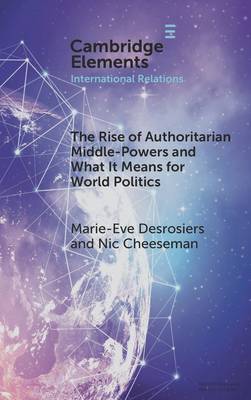
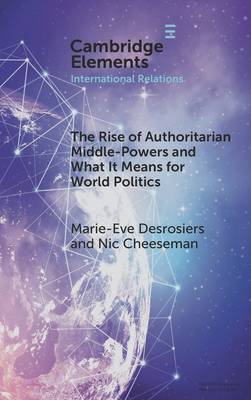
The Rise of Authoritarian Middle-Powers and What It Means for World Politics
Marie-Eve Desrosiers, Nic Cheeseman
€ 112,95
+ 225 punten
Uitvoering
Omschrijving
In recent years, a group of influential authoritarian states has emerged that fall between the ranks of great powers and small states. These authoritarian middle-powers - such as Türkiye and the United Arab Emirates - exert considerable influence, particularly in their region. Yet this development has been overlooked in favor of a focus on superpowers, especially China and Russia. We therefore lack a framework for understanding their behavior and impact. This Element offers the first comprehensive analysis of how non-democratic middle-powers engage abroad. Drawing on critical case studies, it shows how the combination of authoritarian politics and mid-level status leads to distinctive foreign policies. In particular, these strategies erode global democratic norms and institutions through a combination of hard power and transnational repression tempered by hedging and legitimation strategies. In this way, authoritarian middle-powers are helping to unravel the liberal rules-based order. This title is available as Open Access on Cambridge Core.
Specificaties
Betrokkenen
- Auteur(s):
- Uitgeverij:
Inhoud
- Aantal bladzijden:
- 88
- Taal:
- Engels
- Reeks:
Eigenschappen
- Productcode (EAN):
- 9781009705233
- Verschijningsdatum:
- 12/03/2026
- Uitvoering:
- Hardcover
- Formaat:
- Genaaid
- Afmetingen:
- 152 mm x 229 mm
- Gewicht:
- 290 g


Alleen bij Standaard Boekhandel
+ 225 punten op je klantenkaart van Standaard Boekhandel
Cadeau

AANGERADEN


Beoordelingen
We publiceren alleen reviews die voldoen aan de voorwaarden voor reviews. Bekijk onze voorwaarden voor reviews.