


- Afhalen na 1 uur in een winkel met voorraad
- Gratis thuislevering in België vanaf € 30
- Ruim aanbod met 7 miljoen producten
- Afhalen na 1 uur in een winkel met voorraad
- Gratis thuislevering in België vanaf € 30
- Ruim aanbod met 7 miljoen producten





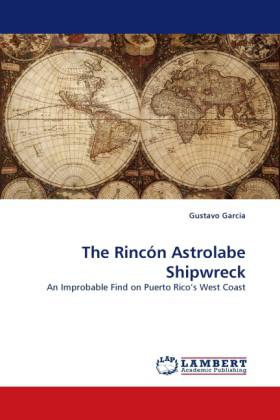
The Rincón Astrolabe Shipwreck
An Improbable Find on Puerto Rico's West Coast
Gustavo Garcia
Paperback | Engels
€ 48,45
+ 96 punten
Omschrijving
On 30 December 1986, a fisherman incidentally discovered the remains of a seventeenth-century merchantman off the coast of Rincón, a small municipality on Puerto Rico's west coast. Among the objects recovered from the site was a nautical astrolabe. This book presents a study on the sea or mariner's astrolabe, a navigation instrument that played a fundamental role in the process of European maritime expansion. During the fifteenth century, Portuguese navigators saw the need to gradually depart from the traditional Mediterranean navigation technique known as "dead reckoning." As their explorations along the West African coast forced them to sail far into the Atlantic Ocean, a new method was developed that consisted of measuring the angle of certain heavenly bodies above the horizon in order to determine the latitude of the observer. For this purpose, instruments that traditionally belonged to the field of astronomy were adapted by seamen. Among them was the astrolabe, which became the most popular by the turn of the sixteenth century.
Specificaties
Betrokkenen
- Auteur(s):
- Uitgeverij:
Inhoud
- Aantal bladzijden:
- 104
- Taal:
- Engels
Eigenschappen
- Productcode (EAN):
- 9783843355919
- Verschijningsdatum:
- 24/09/2010
- Uitvoering:
- Paperback
- Afmetingen:
- 150 mm x 220 mm
- Gewicht:
- 155 g


Alleen bij Standaard Boekhandel
+ 96 punten op je klantenkaart van Standaard Boekhandel
Cadeau

AANGERADEN


Beoordelingen
We publiceren alleen reviews die voldoen aan de voorwaarden voor reviews. Bekijk onze voorwaarden voor reviews.