



Bedankt voor het vertrouwen het afgelopen jaar! Om jou te bedanken bieden we GRATIS verzending (in België) aan op alles gedurende de hele maand januari.
- Afhalen na 1 uur in een winkel met voorraad
- In januari gratis thuislevering in België
- Ruim aanbod met 7 miljoen producten
Bedankt voor het vertrouwen het afgelopen jaar! Om jou te bedanken bieden we GRATIS verzending (in België) aan op alles gedurende de hele maand januari.
- Afhalen na 1 uur in een winkel met voorraad
- In januari gratis thuislevering in België
- Ruim aanbod met 7 miljoen producten





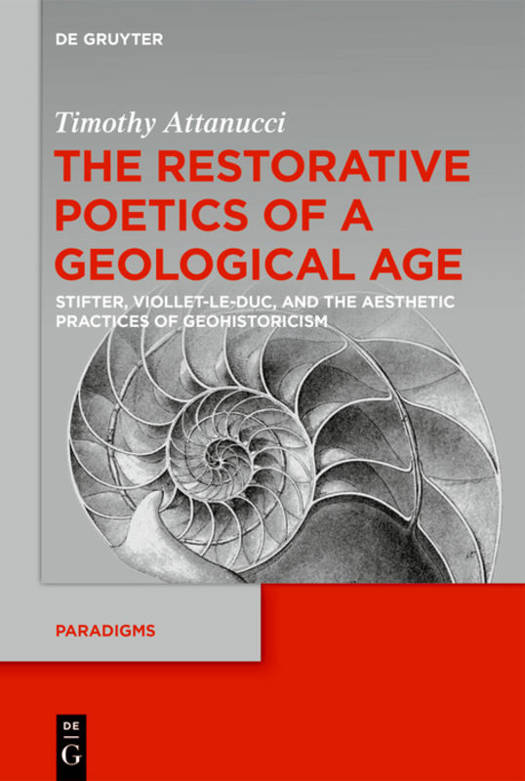
The Restorative Poetics of a Geological Age
Stifter, Viollet-Le-Duc, and the Aesthetic Practices of Geohistoricism
Timothy Attanucci
€ 228,95
+ 457 punten
Omschrijving
At this moment, the concept of the Anthropocene is challenging us to rethink our relationship to the earth and its history, but we have not yet fully understood the extent to which our knowledge of earth history has shaped the historical culture of modernity. This study examines the relationship of geology -- including its central narratives, metaphors, topoi, and other imaginative tools -- to the broader historical imagination that has until now been called "historicism." Two major figures in the rise of historical conservationism and aesthetic historicism in nineteenth-century Europe guide this study of geohistoricism: the Austrian writer, painter, and art conservator Adalbert Stifter, whose novel Der Nachsommer (Indian Summer, 1857) narrates the rise of geohistoricism through the friendship of a geologist and his art-historian mentor; and French architect and conservator Eugène Emmanuel Viollet-le-Duc, whose theoretical/abstract/imaginative understanding of "restoration," based on the geology of Georges Cuvier, informed his practical approach. These authors reveal how geological thought provides a powerful new way to envision and reconstruct past worlds, even as it also demonstrates the erosive precariousness of our present.
Specificaties
Betrokkenen
- Auteur(s):
- Uitgeverij:
Inhoud
- Aantal bladzijden:
- 236
- Taal:
- Engels
- Reeks:
- Reeksnummer:
- nr. 11
Eigenschappen
- Productcode (EAN):
- 9783110685534
- Verschijningsdatum:
- 21/09/2020
- Uitvoering:
- Hardcover
- Formaat:
- Genaaid
- Afmetingen:
- 155 mm x 231 mm
- Gewicht:
- 453 g


Alleen bij Standaard Boekhandel
+ 457 punten op je klantenkaart van Standaard Boekhandel
SOLDEN


Beoordelingen
We publiceren alleen reviews die voldoen aan de voorwaarden voor reviews. Bekijk onze voorwaarden voor reviews.