


- Afhalen na 1 uur in een winkel met voorraad
- Gratis thuislevering in België vanaf € 30
- Ruim aanbod met 7 miljoen producten
- Afhalen na 1 uur in een winkel met voorraad
- Gratis thuislevering in België vanaf € 30
- Ruim aanbod met 7 miljoen producten





€ 109,45
+ 218 punten
Omschrijving
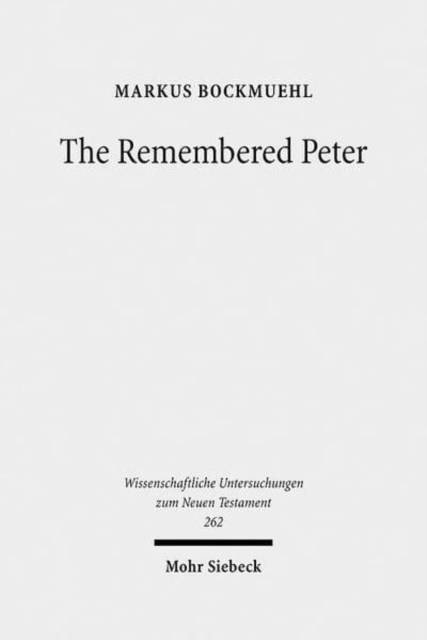
Although Simon Peter was evidently a central figure in both the ministry of Jesus and the mission of the earliest church, his life and thought are shrouded in historical uncertainty. Markus Bockmuehl approaches this problem through focused studies of Peter's highly diverse profile and reception in subsequent Christian sources from Rome and Syria. In Part I of this book, Bockmuehl documents the persistent presence of Peter in personal and collective memory - a phenomenon that usefully illustrates his importance as a centrist figure in the early church. The author goes on to examine the apostle's place in recent historical Jesus research as well as in ongoing debates concerning the so-called New Perspective on Paul and the problem of Peter's relationship with Paul. Part II discusses the complexity of that Petrine memory in Syria and Rome in particular, paying specific attention to Ignatius, Justin and Serapion in the East, as well as to the significance of Roman memory for the long-standing debate about the place of Peter's death. Finally, in Part III of the book Bockmuehl reconnects this investigation of the apostle's aftermath to more conventional historical and exegetical problems, seeking to shed light on their generative function for his subsequent prosopographical profile. In this vein the author examines Jewish meanings and implications of Peter's names, the cultural and religious significance of his origin in the newly excavated village of Bethsaida, and the puzzling Lucan theme of Peter's conversion as this came to feature in early Christian faith and praxis.
Specificaties
Betrokkenen
- Auteur(s):
- Uitgeverij:
Inhoud
- Aantal bladzijden:
- 263
- Taal:
- Engels
- Reeks:
- Reeksnummer:
- nr. 262
Eigenschappen
- Productcode (EAN):
- 9783161505805
- Verschijningsdatum:
- 31/12/2010
- Uitvoering:
- Hardcover
- Formaat:
- Genaaid
- Afmetingen:
- 163 mm x 242 mm
- Gewicht:
- 566 g


Alleen bij Standaard Boekhandel
+ 218 punten op je klantenkaart van Standaard Boekhandel
Cadeau

AANGERADEN


Beoordelingen
We publiceren alleen reviews die voldoen aan de voorwaarden voor reviews. Bekijk onze voorwaarden voor reviews.