Standaard Boekhandel gebruikt cookies en gelijkaardige technologieën om de website goed te laten werken en je een betere surfervaring te bezorgen.
Hieronder kan je kiezen welke cookies je wilt inschakelen:
Technische en functionele cookies
Deze cookies zijn essentieel om de website goed te laten functioneren, en laten je toe om bijvoorbeeld in te loggen. Je kan deze cookies niet uitschakelen.
Analytische cookies
Deze cookies verzamelen anonieme informatie over het gebruik van onze website. Op die manier kunnen we de website beter afstemmen op de behoeften van de gebruikers.
Marketingcookies
Deze cookies delen je gedrag op onze website met externe partijen, zodat je op externe platformen relevantere advertenties van Standaard Boekhandel te zien krijgt.
Bedankt voor het vertrouwen het afgelopen jaar! Om jou te bedanken bieden we GRATIS verzending (in België) aan op alles gedurende de hele maand januari.
Afhalen na 1 uur in een winkel met voorraad
In januari gratis thuislevering in België
Ruim aanbod met 7 miljoen producten
Bedankt voor het vertrouwen het afgelopen jaar! Om jou te bedanken bieden we GRATIS verzending (in België) aan op alles gedurende de hele maand januari.
Je kan maximaal 250 producten tegelijk aan je winkelmandje toevoegen. Verwijdere enkele producten uit je winkelmandje, of splits je bestelling op in meerdere bestellingen.
In januari gratis thuislevering in België (via bpost)
Gratis levering in je Standaard Boekhandel
Omschrijving
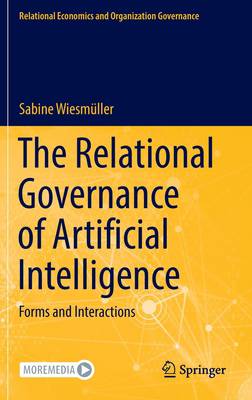
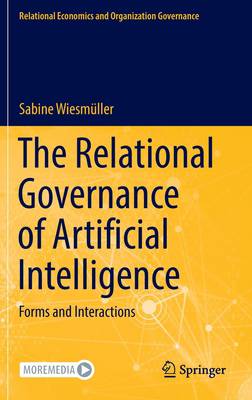
This book addresses the development and adoption of artificial intelligence (AI) in and by companies and the consequent need for private sector AI regulation. Highlighting the challenges to responsible business conduct and considering stakeholder interests, it identifies ethical concerns and discusses AI standards and AI norms. Based on this needs-based analysis, the author chooses relational economics as a suitable approach to develop a theoretical AI governance model. In doing so, AI is conceptualized within relational economics in the form of an autopoietic system. Building on this theoretical contribution, the book specifies the governance adaptivity of the relational AI governance approach for an unregulated AI market and for the case of the pending E.U. AI regulation, and complements it with inductively conducted categories that summarize the main research streams in AI ethics.