


- Afhalen na 1 uur in een winkel met voorraad
- Gratis thuislevering in België vanaf € 30
- Ruim aanbod met 7 miljoen producten
- Afhalen na 1 uur in een winkel met voorraad
- Gratis thuislevering in België vanaf € 30
- Ruim aanbod met 7 miljoen producten





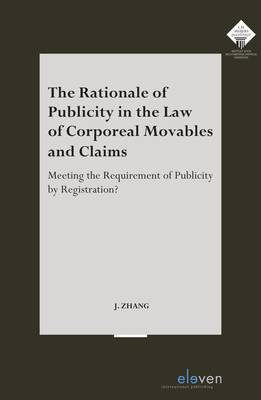

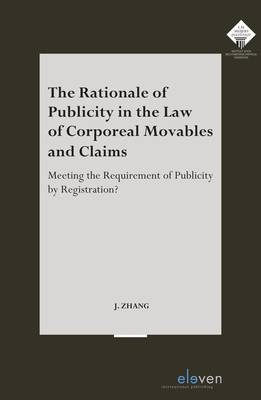
The Rationale of Publicity in the Law of Corporeal Movables and Claims
Meeting the Requirement of Publicity by Registration?
Jing Zhang
€ 134,95
+ 269 punten
Omschrijving
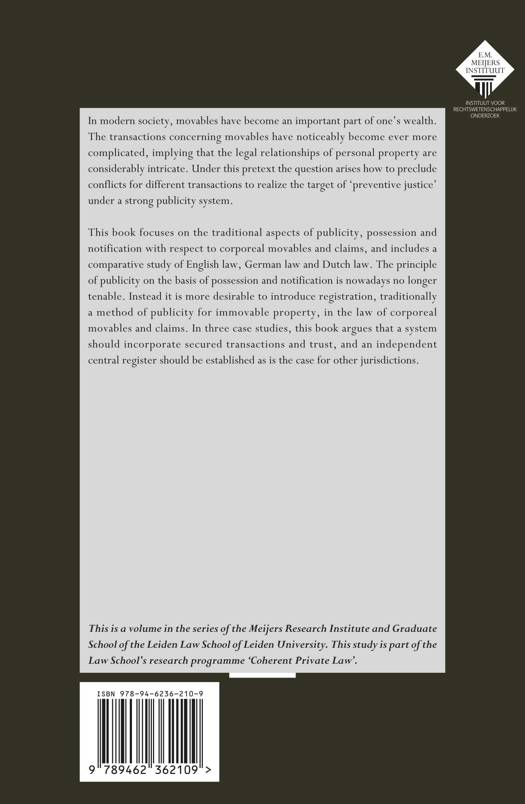
In modern society, movables have become an important part of one's wealth. The transactions concerning movables have noticeably become ever more complicated, implying that the legal relationships of personal property are considerably intricate. Under this pretext the question arises how to preclude conflicts for different transactions to realize the target of 'preventive justice' under a strong publicity system. This book focuses on the traditional aspects of publicity, possession and notification with respect to corporeal movables and claims, and includes a comparative study of English law, German law and Dutch law. The principle of publicity on the basis of possession and notification is nowadays no longer tenable. Instead it is more desirable to introduce registration, traditionally a method of publicity for immovable property, in the law of corporeal movables and claims. In three case studies, this book argues that a system should incorporate secured transactions and trust, and an independent central register should be established as is the case for other jurisdictions.
Specificaties
Betrokkenen
- Auteur(s):
- Uitgeverij:
Inhoud
- Aantal bladzijden:
- 588
- Taal:
- Engels
- Reeks:
- Reeksnummer:
- nr. 366
Eigenschappen
- Productcode (EAN):
- 9789462362109
- Verschijningsdatum:
- 7/05/2021
- Uitvoering:
- Paperback
- Formaat:
- Trade paperback (VS)
- Afmetingen:
- 170 mm x 244 mm
- Gewicht:
- 928 g


Alleen bij Standaard Boekhandel
+ 269 punten op je klantenkaart van Standaard Boekhandel
Cadeau

AANGERADEN


Beoordelingen
We publiceren alleen reviews die voldoen aan de voorwaarden voor reviews. Bekijk onze voorwaarden voor reviews.