


- Afhalen na 1 uur in een winkel met voorraad
- Gratis thuislevering in België vanaf € 30
- Ruim aanbod met 7 miljoen producten
- Afhalen na 1 uur in een winkel met voorraad
- Gratis thuislevering in België vanaf € 30
- Ruim aanbod met 7 miljoen producten





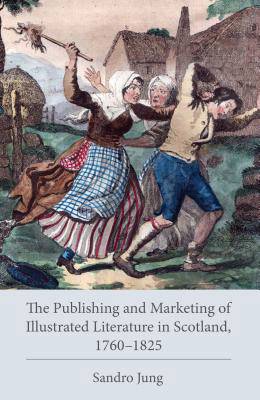
The Publishing and Marketing of Illustrated Literature in Scotland, 1760-1825
Sandro Jung
€ 195,45
+ 390 punten
Omschrijving
A ground-breaking contribution to the economic and cultural history of the eighteenth- and early nineteenth-century publishing of illustrated belles lettres in Scotland, the book offers detailed accounts of numerous agents of prints (booksellers, printers, designers, engravers) and their involvement in the making and marketing of illustrated editions. It examines the ways in which the makers of books not only produced printed visual culture artefacts but also contributed to the ideological inscription of these illustrations to engender patriotic concerns and issues of national identity. The book differs fundamentally from existing interventions in book illustration studies: Examinations of eighteenth- and early nineteenth-century British literary book illustrations have, as a rule, been selective rather than broad in scope or systematic in outlook; they have focused on English examples of book illustrations. By contrast, The Publishing and Marketing of Illustrated Literature in Scotland, 1760-1820 studies a large body of illustrated editions andadopts a systematic and decentered (non-London-centered) approach. It focuses on the examination of the production of literary book illustrations in eighteenth- and early nineteenth-century Scotland, while at the same time bearing in mind that developments in the marketing of illustrated books need to be understood as part of the cultural and book-historical dynamics of exchange that existed between Scotland and England. Not only does the monograph offer the first large-scale study of the subject, contextualizing literary book illustrations in terms of the ideologically defined ventures as part of which they were issued, but it also draws a map of illustrated works that has not been imagined yet by scholars of the history of the eighteenth- and early nineteenth-century book. In doing so, the book provides an account of the publishing of belles lettres and the various strategies that bookseller-publishers deployed to market their editions competitively in both Scotland and England.
Specificaties
Betrokkenen
- Auteur(s):
- Uitgeverij:
Inhoud
- Aantal bladzijden:
- 266
- Taal:
- Engels
- Reeks:
Eigenschappen
- Productcode (EAN):
- 9781611462371
- Verschijningsdatum:
- 7/12/2017
- Uitvoering:
- Hardcover
- Formaat:
- Genaaid
- Afmetingen:
- 155 mm x 231 mm
- Gewicht:
- 816 g


Alleen bij Standaard Boekhandel
+ 390 punten op je klantenkaart van Standaard Boekhandel
Cadeau

AANGERADEN


Beoordelingen
We publiceren alleen reviews die voldoen aan de voorwaarden voor reviews. Bekijk onze voorwaarden voor reviews.