


- Afhalen na 1 uur in een winkel met voorraad
- Gratis thuislevering in België vanaf € 30
- Ruim aanbod met 7 miljoen producten
- Afhalen na 1 uur in een winkel met voorraad
- Gratis thuislevering in België vanaf € 30
- Ruim aanbod met 7 miljoen producten





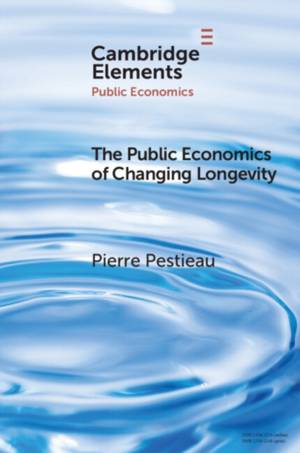
The Public Economics of Changing Longevity
Pierre Pestieau
€ 36,45
+ 72 punten
Omschrijving
Our societies are witnessing a steady increase in longevity. This demographic evolution is accompanied by some convergence across countries, but at the same time substantial longevity inequalities persist within nations across income classes. This Element aims to survey some crucial implications of changing longevity on the design of optimal public policy. For that purpose, it first focuses on some difficulties raised by risky and varying lifetime for the representation of individual and social preferences. Then, it explore some central implications of changing longevity for optimal policy making, regarding prevention against premature death, pension policies, education, health care and long-term care. The author distinguishes between the case when longevity is partially the responsibility of individuals and the case when longevity is plainly exogenous.
Specificaties
Betrokkenen
- Auteur(s):
- Uitgeverij:
Inhoud
- Aantal bladzijden:
- 82
- Taal:
- Engels
- Reeks:
Eigenschappen
- Productcode (EAN):
- 9781009170857
- Verschijningsdatum:
- 10/02/2022
- Uitvoering:
- Paperback
- Formaat:
- Trade paperback (VS)
- Afmetingen:
- 152 mm x 229 mm
- Gewicht:
- 122 g


Alleen bij Standaard Boekhandel
+ 72 punten op je klantenkaart van Standaard Boekhandel
Cadeau

AANGERADEN


Beoordelingen
We publiceren alleen reviews die voldoen aan de voorwaarden voor reviews. Bekijk onze voorwaarden voor reviews.