


- Afhalen na 1 uur in een winkel met voorraad
- Gratis thuislevering in België vanaf € 30
- Ruim aanbod met 7 miljoen producten
- Afhalen na 1 uur in een winkel met voorraad
- Gratis thuislevering in België vanaf € 30
- Ruim aanbod met 7 miljoen producten





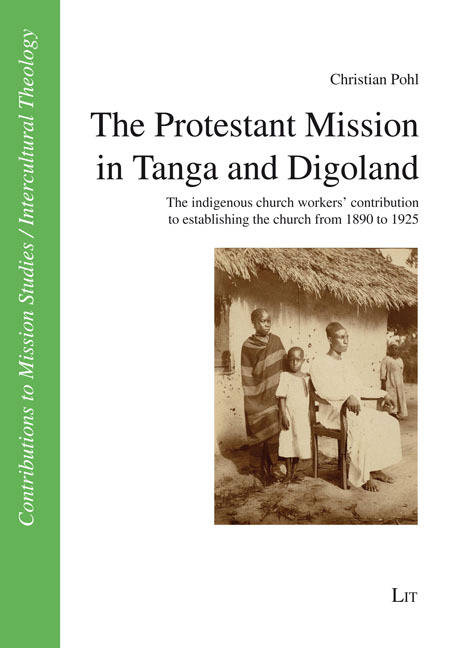
The Protestant Mission in Tanga and Digoland
The Indigenous Church Workers' Contribution to Establishing the Church from 1890 to 1925
Christian Pohl
€ 39,45
+ 78 punten
Omschrijving
Church historiography of East Africa has long focused on the history of foreign missionaries and their activities and was written from a Western perspective. Usually, the role of the indigenous Christians was little appreciated and only marginally included. However, this corresponds neither to their actual importance nor to the quantity of their documents which are handed down.
For this reason, the present study focuses on the contribution made by the local co-workers in establishing the church, using the town of Tanga and the neighbouring Digoland as examples. As such, it contributes to the global and intercultural history of Christianity. Impulses from the postcolonial debate are taken up, but also adapted and modified to the existing conditions.
Christian Pohl was head of the Northern Regional Office of Mission OneWorld (Mission EineWelt) for several years, the Centre for Partnership, Development and Mission of the Evangelical Lutheran Church in Bavaria and currently teaches at the Mwika Bible and Theological College in Tanzania.
For this reason, the present study focuses on the contribution made by the local co-workers in establishing the church, using the town of Tanga and the neighbouring Digoland as examples. As such, it contributes to the global and intercultural history of Christianity. Impulses from the postcolonial debate are taken up, but also adapted and modified to the existing conditions.
Christian Pohl was head of the Northern Regional Office of Mission OneWorld (Mission EineWelt) for several years, the Centre for Partnership, Development and Mission of the Evangelical Lutheran Church in Bavaria and currently teaches at the Mwika Bible and Theological College in Tanzania.
Specificaties
Betrokkenen
- Auteur(s):
- Uitgeverij:
Inhoud
- Aantal bladzijden:
- 322
- Taal:
- Engels
- Reeks:
Eigenschappen
- Productcode (EAN):
- 9783643917188
- Verschijningsdatum:
- 1/12/2025
- Uitvoering:
- Paperback
- Formaat:
- Trade paperback (VS)
- Afmetingen:
- 140 mm x 210 mm


Alleen bij Standaard Boekhandel
+ 78 punten op je klantenkaart van Standaard Boekhandel
Cadeau

AANGERADEN


Beoordelingen
We publiceren alleen reviews die voldoen aan de voorwaarden voor reviews. Bekijk onze voorwaarden voor reviews.