


- Afhalen na 1 uur in een winkel met voorraad
- Gratis thuislevering in België vanaf € 30
- Ruim aanbod met 7 miljoen producten
- Afhalen na 1 uur in een winkel met voorraad
- Gratis thuislevering in België vanaf € 30
- Ruim aanbod met 7 miljoen producten




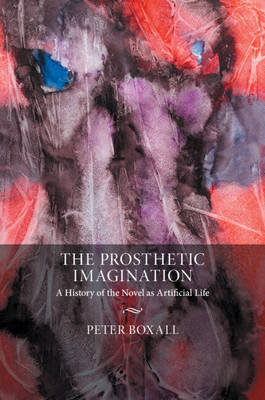
The Prosthetic Imagination
A History of the Novel as Artificial Life
Peter Boxall
Paperback | Engels
€ 34,95
+ 69 punten
Omschrijving
In The Prosthetic Imagination, leading critic Peter Boxall argues that we are now entering an artificial age, in which our given bodies enter into new conjunctions with our prosthetic extensions. This new age requires us to reimagine our relation to our bodies, and to our environments, and Boxall suggests that the novel as a form can guide us in this imaginative task. Across a dazzling range of prose fictions, from Thomas More's Utopia to Margaret Atwood's Oryx and Crake, Boxall shows how the novel has played a central role in forging the bodies in which we extend ourselves into the world. But if the novel has helped to give our world a human shape, it also contains forms of life that elude our existing human architectures: new amalgams of the living and the non-living that are the hidden province of the novel imagination. These latent conjunctions, Boxall argues, are preserved in the novel form, and offer us images of embodied being that can help us orient ourselves to our new prosthetic condition.
Specificaties
Betrokkenen
- Auteur(s):
- Uitgeverij:
Inhoud
- Aantal bladzijden:
- 423
- Taal:
- Engels
Eigenschappen
- Productcode (EAN):
- 9781108819121
- Verschijningsdatum:
- 29/05/2025
- Uitvoering:
- Paperback
- Formaat:
- Trade paperback (VS)
- Afmetingen:
- 152 mm x 229 mm
- Gewicht:
- 562 g


Alleen bij Standaard Boekhandel
+ 69 punten op je klantenkaart van Standaard Boekhandel
AANGERADEN


Beoordelingen
We publiceren alleen reviews die voldoen aan de voorwaarden voor reviews. Bekijk onze voorwaarden voor reviews.