


- Afhalen na 1 uur in een winkel met voorraad
- Gratis thuislevering in België vanaf € 30
- Ruim aanbod met 7 miljoen producten
- Afhalen na 1 uur in een winkel met voorraad
- Gratis thuislevering in België vanaf € 30
- Ruim aanbod met 7 miljoen producten





€ 2,99
+ 2 punten
Eenvoudig bestellen
Veilig betalen


Onmiddellijk geleverd via e-mail
Omschrijving
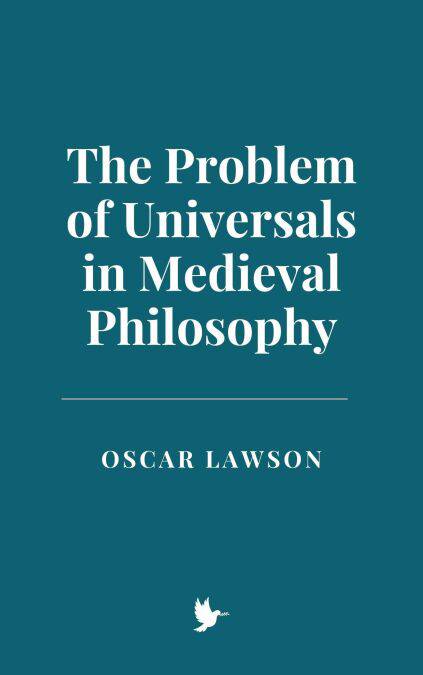
The problem of universals, a central issue in Western philosophy, examines the nature and existence of general concepts or shared properties such as "humanity," "redness," or "justice." This enduring philosophical question explores whether universals exist independently of the mind, as real entities in a metaphysical realm, or if they are merely mental constructs or linguistic conventions. From its inception in the works of Plato and Aristotle, through its intricate development in medieval scholasticism, and into its reformulations during the early modern period, the problem of universals has shaped fundamental inquiries in metaphysics, epistemology, theology, and science.
This study traces the evolution of the problem of universals across twenty chapters, offering a detailed examination of the positions articulated by major figures such as Plato, Aristotle, Augustine, Thomas Aquinas, John Duns Scotus, William of Ockham, and others. It analyzes key distinctions, including those between realism, conceptualism, and nominalism, and explores how these theories address the relationship between universals and particulars, essence and existence, and the unity and diversity of being. Special attention is given to the theological dimensions of the debate, particularly in relation to doctrines like the Trinity, the Incarnation, and divine omniscience, as well as to its implications for medieval science and ethics.
The transition from medieval to early modern thought, marked by critiques of scholasticism and the rise of empirical methodologies, further transformed the debate. Thinkers such as Francis Bacon, René Descartes, and John Locke redefined universals within new frameworks of scientific inquiry and epistemology, laying the groundwork for contemporary discussions in philosophy, logic, and language. This study concludes by reflecting on the legacy of the problem of universals, highlighting its enduring relevance for understanding the structure of reality, the foundations of knowledge, and the nature of human cognition.
By synthesizing historical and philosophical analysis, this work demonstrates the profound influence of the problem of universals on the intellectual traditions of the West, revealing it to be not only a technical issue in metaphysics but also a lens through which to explore fundamental questions about the unity and diversity of existence.
Specificaties
Betrokkenen
- Auteur(s):
- Uitgeverij:
Inhoud
- Taal:
- Engels
Eigenschappen
- Productcode (EAN):
- 9798230244486
- Verschijningsdatum:
- 15/11/2024
- Uitvoering:
- E-book
- Formaat:
- ePub


Alleen bij Standaard Boekhandel
+ 2 punten op je klantenkaart van Standaard Boekhandel
CADEAU

AANGERADEN


Beoordelingen
We publiceren alleen reviews die voldoen aan de voorwaarden voor reviews. Bekijk onze voorwaarden voor reviews.