


- Afhalen na 1 uur in een winkel met voorraad
- Gratis thuislevering in België vanaf € 30
- Ruim aanbod met 7 miljoen producten
- Afhalen na 1 uur in een winkel met voorraad
- Gratis thuislevering in België vanaf € 30
- Ruim aanbod met 7 miljoen producten





€ 28,45
+ 56 punten
Uitvoering
Omschrijving
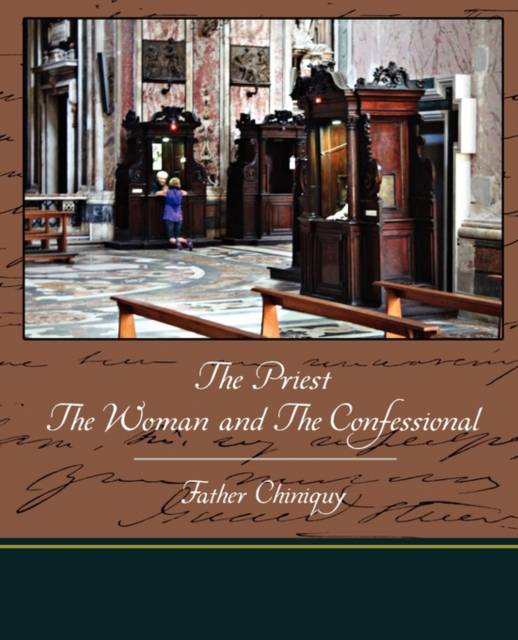
The Priest, The Woman And The Confessional was written by Father Chiniquy in 1875. This book discussed the role of the priest in the confessional in regards to women. The first chapter begins, "There are two women who ought to be the constant objects of the compassion of the disciples of Christ, and for whom daily prayers ought to be offered at the mercy-seat--the Brahmin woman, who, deceived by her priests, burns herself on the corpse of her husband to appease the wrath of her wooden gods; and the Roman Catholic woman, who, not less deceived by her priests, suffers a torture far more cruel and ignominious in the confessional-box to appease the wrath of her wafer-god. For I do not exaggerate when I say that for many noble-hearted, well-educated, high-minded women to be forced to unveil their hearts before the eyes of a man, to open to him all the most sacred recesses of their souls, all the most sacred mysteries of their single or married life, to allow him to put to them questions which the most depraved woman would never consent to hear from her vilest seducer, is often more horrible and intolerable than to be tied on burning coals."
Specificaties
Betrokkenen
- Auteur(s):
- Uitgeverij:
Inhoud
- Aantal bladzijden:
- 140
- Taal:
- Engels
Eigenschappen
- Productcode (EAN):
- 9781438512037
- Verschijningsdatum:
- 17/02/2009
- Uitvoering:
- Paperback
- Formaat:
- Trade paperback (VS)
- Afmetingen:
- 190 mm x 235 mm
- Gewicht:
- 254 g


Alleen bij Standaard Boekhandel
+ 56 punten op je klantenkaart van Standaard Boekhandel
Cadeau

AANGERADEN


Beoordelingen
We publiceren alleen reviews die voldoen aan de voorwaarden voor reviews. Bekijk onze voorwaarden voor reviews.