


- Afhalen na 1 uur in een winkel met voorraad
- Gratis thuislevering in België vanaf € 30
- Ruim aanbod met 7 miljoen producten
- Afhalen na 1 uur in een winkel met voorraad
- Gratis thuislevering in België vanaf € 30
- Ruim aanbod met 7 miljoen producten





€ 8,99
+ 8 punten
Omschrijving
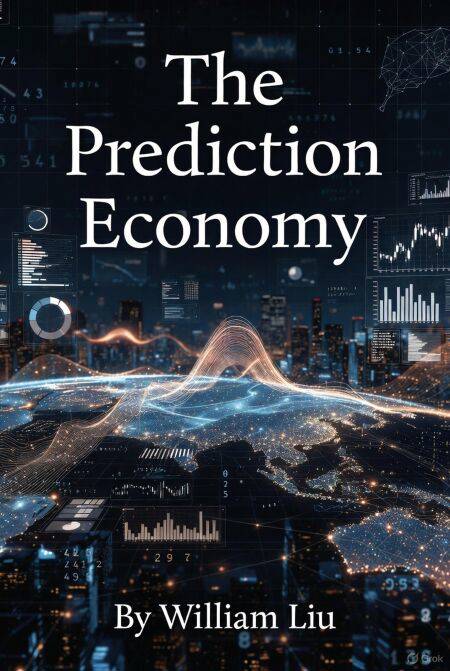
We no longer live in a reaction-based economy. We live in a prediction economy.
Prices move before news breaks. Policies shift before outcomes are visible. Markets, governments, and institutions increasingly act not on reality itself, but on models of what might happen next.
In The Prediction Economy, William Liu examines how forecasts, algorithms, and expectations have become primary economic forces. Drawing on economics, AI systems, market behavior, and public policy, the book reveals how probabilistic thinking now shapes everything from financial markets and risk management to political strategy and institutional decision-making.
This is not a trading manual and not a technical textbook. It is a clear, systems-level exploration of how prediction functions as power—how models influence behavior, how signals get priced before events occur, and why those who understand probability gain an advantage over those who react too late.
The book explores:
Why expectations often matter more than outcomes How algorithms and forecasting systems influence markets and policy The difference between risk, uncertainty, and manufactured confidence How prediction reshapes accountability, incentives, and controlThe Prediction Economy is for readers interested in economics, strategy, AI, geopolitics, and the hidden mechanics that increasingly determine real-world outcomes.
Specificaties
Betrokkenen
- Auteur(s):
- Uitgeverij:
Inhoud
- Taal:
- Engels
Eigenschappen
- Productcode (EAN):
- 9798232076191
- Verschijningsdatum:
- 13/12/2025
- Uitvoering:
- E-book
- Formaat:
- ePub


Alleen bij Standaard Boekhandel
+ 8 punten op je klantenkaart van Standaard Boekhandel
CADEAU

AANGERADEN


Beoordelingen
We publiceren alleen reviews die voldoen aan de voorwaarden voor reviews. Bekijk onze voorwaarden voor reviews.