


- Afhalen na 1 uur in een winkel met voorraad
- Gratis thuislevering in België vanaf € 30
- Ruim aanbod met 7 miljoen producten
- Afhalen na 1 uur in een winkel met voorraad
- Gratis thuislevering in België vanaf € 30
- Ruim aanbod met 7 miljoen producten





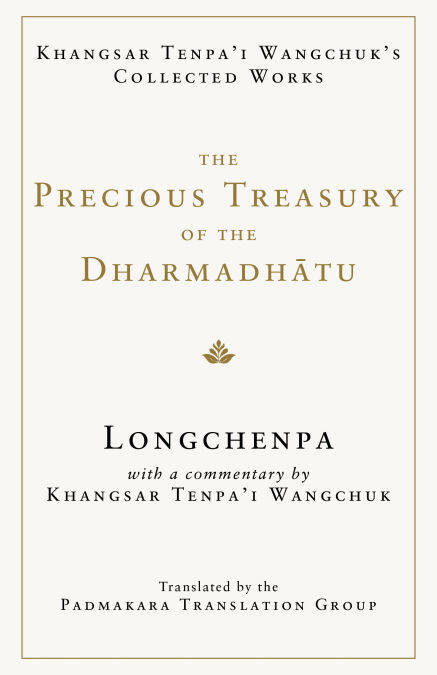
The Precious Treasury of the Dharmadhatu E-BOOK
Khangsar Tenpai Wangchuks Collected Works
Longchenpa, Khangsar Tenpa'i Wangchuk
E-book | Engels
€ 68,95
+ 68 punten
Omschrijving
The third volume of the Collected Works of the modern Tibetan master Khangsar Tenpa’i Wangchuk, this is the first published translation of a commentary on the 14th-century master Longchenpa’s Precious Treasury of the Dharmadhātu, a verse text on the direct practices to realize the nature of mind taught within the Nyingma school of Tibetan Buddhism.
Among the great works of the omniscient Longchenpa, The Treasury of the Dharmadhātu, one of Longchenpa’s (1308–1363) Seven Treasuries is particularly revered among Tibetan poetic and scholastic works on Dzogchen meditation. The text expounds the intrinsic nature of the mind—awareness, the vast expanse of the dharmadhātu—as the basis and medium of the endless and unlimited display of phenomenal existence, of both mundane samsara and exalted nirvana. The teachers are laid out according to the approach of trekchö, the practice that “cuts through” the tough deposit of conceptual fabrication and habitual tendencies, accumulated from beginningless time, which obscures the original, unimpaired, and ever-present purity of the mind’s nature, the sugatagarbha.
Khangsar Tenpa’i Wangchuk’s modern commentary brings to life the fine points of the text as a meditation manual. Completed in 1996, it is the first extensive and detailed commentary ever to be produced on Longchenpa’s root text, with the exception of the author’s own autocommentary. In contrast with the general “meaning commentary” composed by Longchenpa himself, which explains the sense of the root text in broad strokes, supporting it with many scriptural citations, Tenpa’i Wangchuk’s is a “word-commentary” in which both the words and syntax of the root text are elucidated, thereby giving clear guidance and insight into the intentions of the author. Both root text and commentary are said to reflect the realizations of the lineage holders of the tradition and present a clear picture of the perfection of the Buddhist path.
Among the great works of the omniscient Longchenpa, The Treasury of the Dharmadhātu, one of Longchenpa’s (1308–1363) Seven Treasuries is particularly revered among Tibetan poetic and scholastic works on Dzogchen meditation. The text expounds the intrinsic nature of the mind—awareness, the vast expanse of the dharmadhātu—as the basis and medium of the endless and unlimited display of phenomenal existence, of both mundane samsara and exalted nirvana. The teachers are laid out according to the approach of trekchö, the practice that “cuts through” the tough deposit of conceptual fabrication and habitual tendencies, accumulated from beginningless time, which obscures the original, unimpaired, and ever-present purity of the mind’s nature, the sugatagarbha.
Khangsar Tenpa’i Wangchuk’s modern commentary brings to life the fine points of the text as a meditation manual. Completed in 1996, it is the first extensive and detailed commentary ever to be produced on Longchenpa’s root text, with the exception of the author’s own autocommentary. In contrast with the general “meaning commentary” composed by Longchenpa himself, which explains the sense of the root text in broad strokes, supporting it with many scriptural citations, Tenpa’i Wangchuk’s is a “word-commentary” in which both the words and syntax of the root text are elucidated, thereby giving clear guidance and insight into the intentions of the author. Both root text and commentary are said to reflect the realizations of the lineage holders of the tradition and present a clear picture of the perfection of the Buddhist path.
Specificaties
Betrokkenen
- Auteur(s):
- Uitgeverij:
Inhoud
- Aantal bladzijden:
- 880
- Taal:
- Engels
Eigenschappen
- Productcode (EAN):
- 9780834846401
- Verschijningsdatum:
- 26/01/2026
- Uitvoering:
- E-book
- Beveiligd met:
- Adobe DRM
- Formaat:
- ePub


Alleen bij Standaard Boekhandel
+ 68 punten op je klantenkaart van Standaard Boekhandel
Cadeau

AANGERADEN


Beoordelingen
We publiceren alleen reviews die voldoen aan de voorwaarden voor reviews. Bekijk onze voorwaarden voor reviews.