


- Afhalen na 1 uur in een winkel met voorraad
- Gratis thuislevering in België vanaf € 30
- Ruim aanbod met 7 miljoen producten
- Afhalen na 1 uur in een winkel met voorraad
- Gratis thuislevering in België vanaf € 30
- Ruim aanbod met 7 miljoen producten





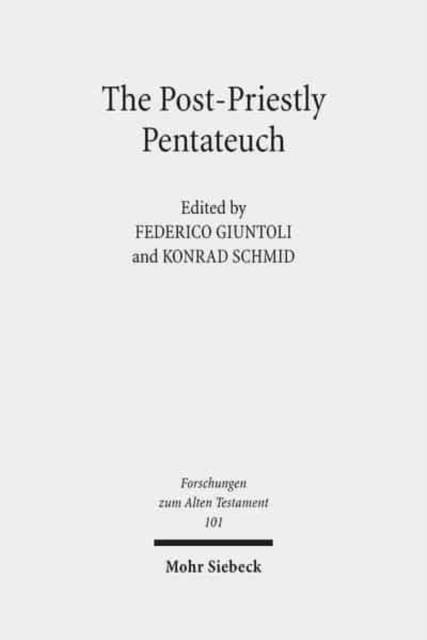
The Post-Priestly Pentateuch
New Perspectives on Its Redactional Development and Theological Profiles
€ 140,95
+ 281 punten
Omschrijving
In the current conversation regarding the composition of the Pentateuch, there is mounting evidence of post-exilic redaction, which runs contrary to the conclusions of scholarship from the previous century. Many scholars today hold that the present form of the Pentateuch emerged in the post-exilic period, when Israel was under Persian and Hellenistic rule. The post-exilic community undertook the arduous task of gathering their literary and cultural heritage, which included ancient texts in combination with ex novo additions. The eventual result was the first five books of their scriptures in the present form. These post-exilic redactions, posterior to the Priestly contributions, are the focus of this volume. Contributors: Reinhard Achenbach, Rainer Albertz, Joseph Blenkinsopp, David M. Carr, Jan C. Gertz, Federico Giuntoli, Bernard S. Jackson, Matthias Kockert, Christoph Levin, Bernard M. Levinson, Christophe Nihan, Eckart Otto, Alexander Rofe, Thomas Romer, Konrad Schmid, Ludwig Schmidt, Hans-Christoph Schmitt
Specificaties
Betrokkenen
- Uitgeverij:
Inhoud
- Aantal bladzijden:
- 351
- Taal:
- Engels
- Reeks:
Eigenschappen
- Productcode (EAN):
- 9783161531217
- Verschijningsdatum:
- 1/11/2015
- Uitvoering:
- Hardcover
- Formaat:
- Genaaid
- Afmetingen:
- 153 mm x 229 mm
- Gewicht:
- 426 g

Alleen bij Standaard Boekhandel
+ 281 punten op je klantenkaart van Standaard Boekhandel

Beoordelingen
We publiceren alleen reviews die voldoen aan de voorwaarden voor reviews. Bekijk onze voorwaarden voor reviews.