


- Afhalen na 1 uur in een winkel met voorraad
- Gratis thuislevering in België vanaf € 30
- Ruim aanbod met 7 miljoen producten
- Afhalen na 1 uur in een winkel met voorraad
- Gratis thuislevering in België vanaf € 30
- Ruim aanbod met 7 miljoen producten





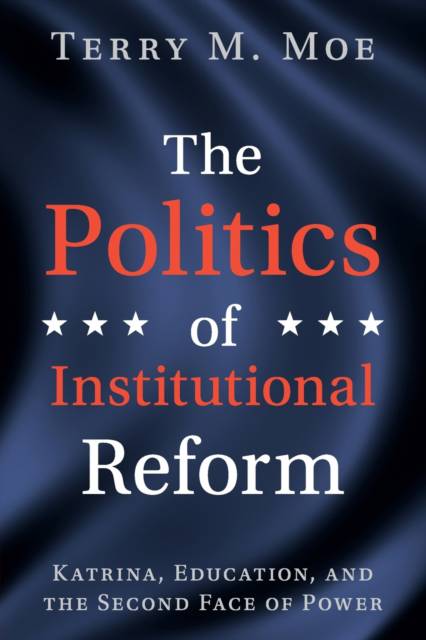
The Politics of Institutional Reform
Katrina, Education, and the Second Face of Power
Terry M Moe
Paperback | Engels
€ 67,95
+ 135 punten
Uitvoering
Omschrijving
In this ground breaking analysis, Terry M. Moe treats Hurricane Katrina as a natural experiment that offers a rare opportunity to learn about the role of power in the politics of institutional reform. When Katrina hit, it physically destroyed New Orleans' school buildings, but it also destroyed the vested-interest power that had protected the city's abysmal education system from major reform. With the constraints of power lifted, decision makers who had been incremental problem-solvers turned into revolutionaries, creating the most innovative school system in the entire country. The story of New Orleans' path from failure to revolution is fascinating, but, more importantly, it reveals the true role of power, whose full effects normally cannot be observed, because power has a 'second face' that is hidden and unobservable. Making use of Katrina's analytic leverage, Moe pulls back the curtain to show that this "second face" has profound consequences that stifle and undermine society's efforts to fix failing institutions.
Specificaties
Betrokkenen
- Auteur(s):
- Uitgeverij:
Inhoud
- Aantal bladzijden:
- 178
- Taal:
- Engels
Eigenschappen
- Productcode (EAN):
- 9781108740388
- Verschijningsdatum:
- 5/09/2019
- Uitvoering:
- Paperback
- Formaat:
- Trade paperback (VS)
- Afmetingen:
- 152 mm x 229 mm
- Gewicht:
- 267 g



Alleen bij Standaard Boekhandel
+ 135 punten op je klantenkaart van Standaard Boekhandel
Cadeau

AANGERADEN


Beoordelingen
We publiceren alleen reviews die voldoen aan de voorwaarden voor reviews. Bekijk onze voorwaarden voor reviews.